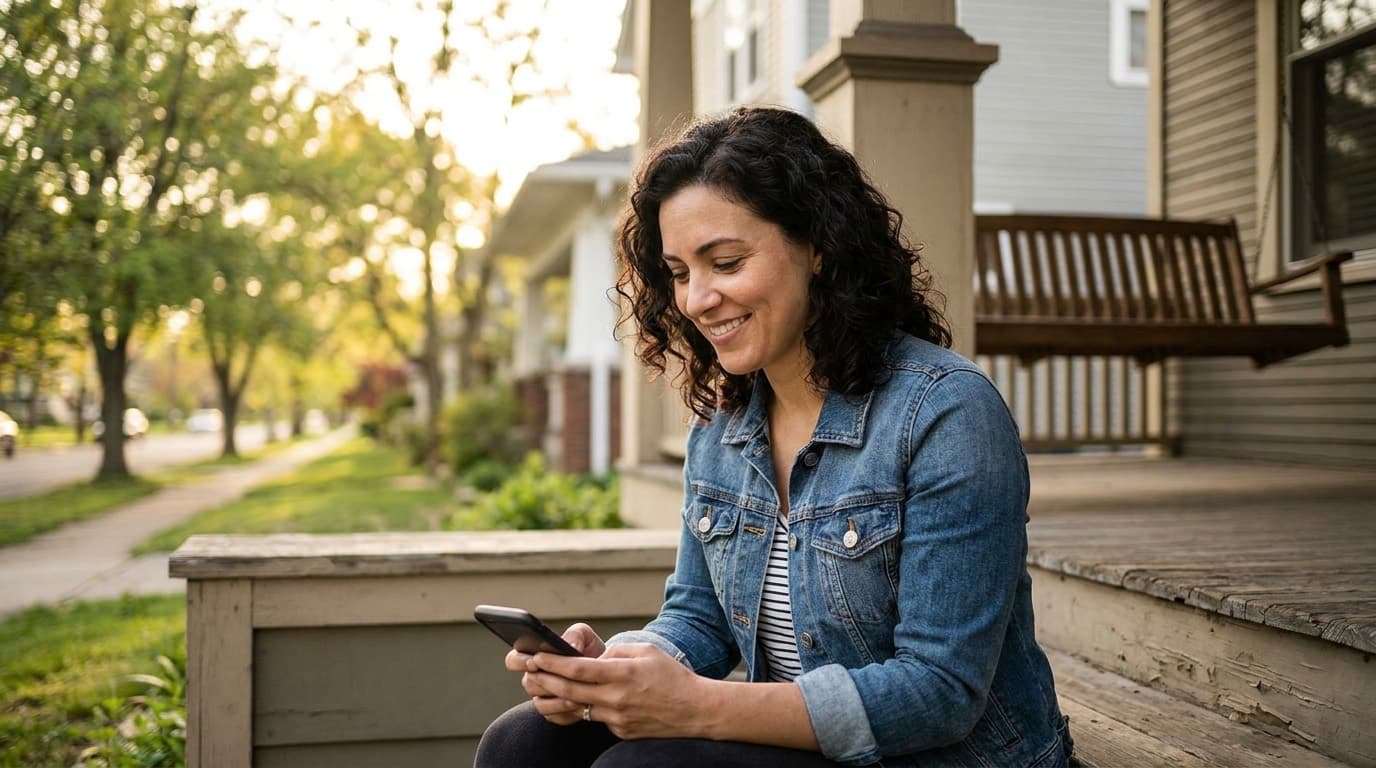
There is no such thing as the American dating market. There are hundreds of them, stitched together by interstates, and they behave so differently that the same profile on the same platform can live two completely different lives. In Manhattan it competes for attention with thousands of others. In a county seat in western Nebraska it may be one of a few dozen within an hour's drive.
Most advice about free dating is written as though location were a detail. It is closer to the whole story. Where you live decides how many people you can realistically meet, how far you will travel to meet them, which features actually matter — and whether a paywall is a minor irritation or the thing standing between you and the only three promising people in your county.
Online dating is hardly a niche habit in the US. Pew Research Center found that three in ten American adults have used a dating site or app, and that one in ten partnered adults met their current partner on one — rising to one in five among partnered adults under 30. Roughly a third of people who have dated online say they have paid to do it at some point. This guide is for everyone who would rather not, and it is organised around the one thing no platform can change for you: where you are.
Why Your State Shapes Your Dating Life
American geography is lopsided in ways that matter for dating. California has more than 39 million residents. Wyoming has fewer than 600,000, spread across an area slightly larger than the whole of the United Kingdom.
The 2020 census classed 80% of Americans as living in urban areas, but the Census Bureau's definition is generous — anywhere with at least 5,000 people can qualify — so plenty of what is officially urban would feel like a small town to someone from Chicago. The remaining one in five Americans live somewhere the Bureau counts as rural.
Meanwhile, the internet has become the main way American couples meet. A Stanford-led study published in 2019 found that by 2017, meeting online had overtaken meeting through friends as the most common way heterosexual couples in the US got together, accounting for around 39% of couples who met that year.
Put those facts side by side and you get the central point of this guide. The fewer people there are around you, the more of your dating life runs through a screen — and the more it matters that the screen does not charge you to use it. Paying to message a big city is a choice. Paying to message the same forty people in a rural county is a much worse deal.
Three Kinds of Local Dating Market
Going state by state is less useful than it sounds, because California alone contains every kind of dating market there is. It helps more to think in three types. Nearly everyone lives in one of them, and each has a different problem to solve.
| Big metro | Mid-size city | Small town or rural | |
|---|---|---|---|
| What is scarce | Attention — everyone has options | Novelty — faces start repeating | People — the pool is genuinely small |
| Where to start searching | Your own side of the city | The whole metro area, plus the nearest city | The whole state, or a two-hour drive |
| The common trap | Endless browsing, very few dates | Deciding the pool is used up after a month | Paying to reach a pool that was tiny to begin with |
| What tends to work | A specific plan, suggested early | Patience, and a profile that changes | Saying how far you will travel, up front |
Big metros: the problem is attention, not supply
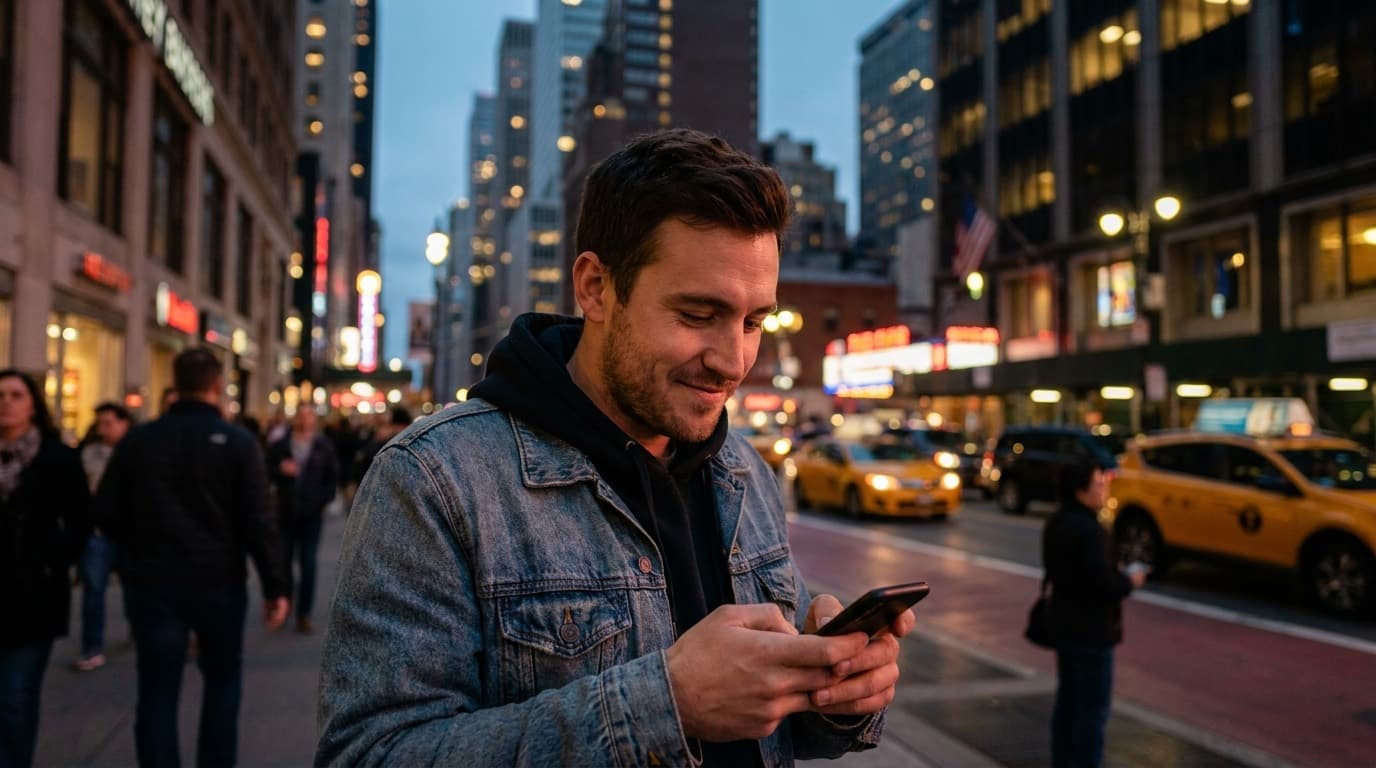
If you live in New York, Los Angeles, Chicago, Houston or Atlanta, you are not short of people. You are short of their attention, and they are short of yours. The typical big-city pattern is an inbox full of conversations that go nowhere, because everyone is juggling several and nobody is in a hurry.
Two adjustments help more than any feature. First, shrink the map. A match forty-five minutes away by subway or freeway is, on a weeknight, effectively a long-distance relationship; searching your own part of the city produces fewer profiles and more dates. Second, move faster. Big-city conversations have a short half-life, so suggest a specific time and place within a few days rather than waiting for a perfect moment that never arrives. Our guide to making real connections in New York City goes into the city-specific version of this.
Mid-size cities: the small-world problem
Omaha, Tulsa, Albuquerque, Louisville, Richmond — cities large enough to have a real dating scene and small enough that after a month you start recognising faces. Mutual friends are almost guaranteed, which is a safety advantage and an occasional source of awkwardness in equal measure.
The mistake here is concluding that the pool is used up. It is not; it turns over. People move to town, come out of relationships and sign up for the first time every week. Check back regularly rather than giving up, change your photos (not just their order) every couple of months so returning browsers see something new, and treat the nearest city as part of your market. Tulsa and Oklahoma City are roughly a hundred miles apart — a long first date, but a perfectly normal third one.
Small towns and rural areas: the problem is distance
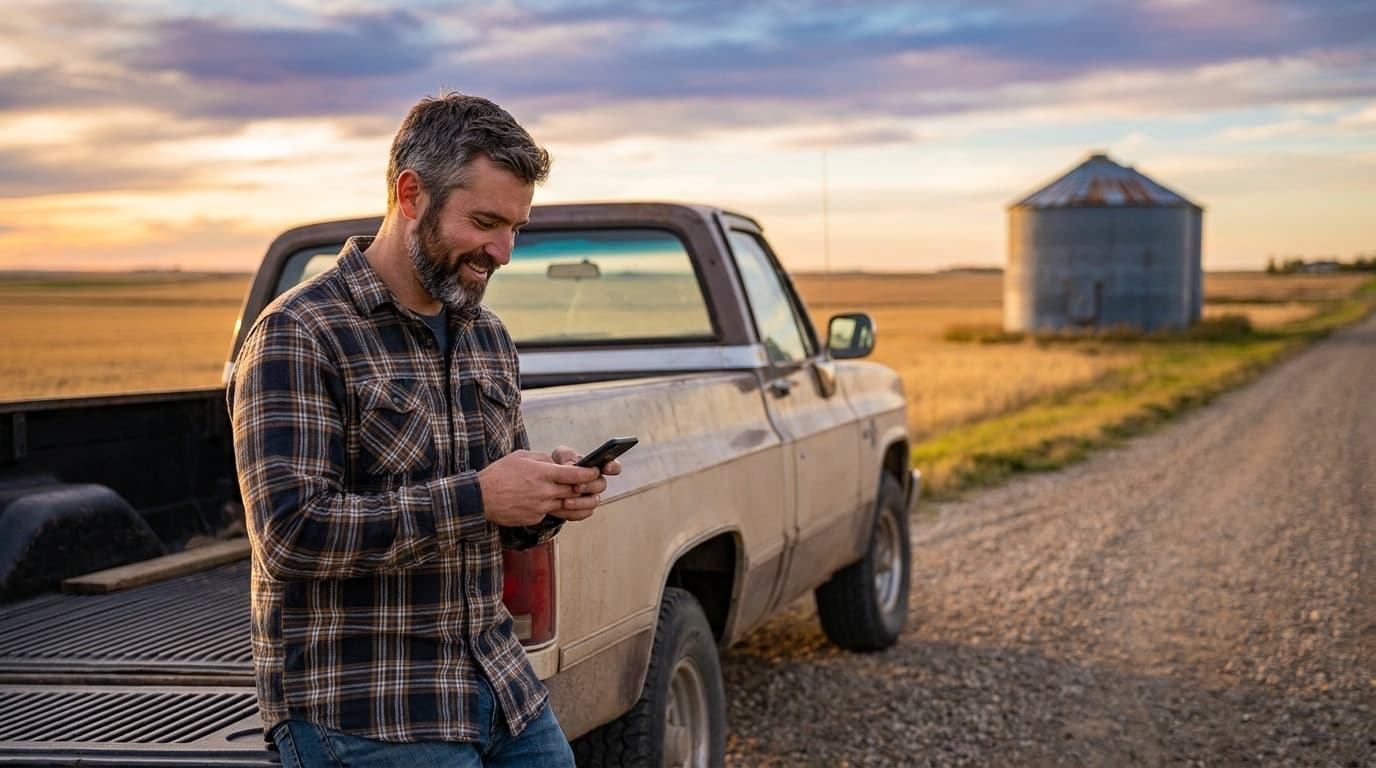
For the one in five Americans outside urban areas, the challenge is simpler and harder at once: there may not be many single people nearby at all. Widening your search to the whole state, or to everything within a two-hour drive, is not settling. It is the only way the numbers work.
Be explicit about distance in your profile. A single line — happy to drive an hour for the right person — saves both of you a conversation that stalls on logistics. Pick midpoints for first dates, so that neither person is making the whole trip. And be honest with yourself about what paying would buy you here. A subscription cannot add people to your county. When the pool is small, the last thing it should cost is money to talk to it.
Your State Line Is Not Your Search Radius
Search filters encourage you to think in states, because a state is a tidy box in a dropdown menu. Real life is messier. A striking number of American metro areas sprawl straight across state lines:
- New York City draws daily commuters from New Jersey and Connecticut.
- Washington, DC is really a region spanning Maryland and Virginia, with its own famously work-first culture that our guide to dating in Washington DC covers in detail.
- Kansas City is two cities with the same name, one in Missouri and one in Kansas.
- Portland, Oregon and Vancouver, Washington face each other across the Columbia River.
- Philadelphia reaches into South Jersey and Delaware, Cincinnati into Northern Kentucky, St. Louis into Illinois and Charlotte into South Carolina.
If you live in one of these places and search only your own state, you are cutting out a large share of the people who are genuinely local to you — often people who live closer to you than most of your own state does. Run the search once for every state your metro touches.
What "Without Payment" Should Mean, Wherever You Live
Location changes almost everything about dating, but it does not change what free should mean. The test is the same in Manhattan and in Montana: can you start a conversation with someone near you, today, without paying anything?
In the US, payment usually arrives by one of three routes. There is the app store subscription, billed and cancelled through Apple or Google rather than through the dating service itself. There is the "free trial" that asks for a card and renews automatically. And there is the free tier that lets you browse your area happily, then charges the moment you try to reply.
The law offers some protection. The federal Restore Online Shoppers' Confidence Act requires online sellers to disclose the terms of a recurring charge clearly, get your express consent before billing you and give you a simple way to stop the payments, and a number of states add automatic-renewal laws of their own. California's is among the stricter ones: if you signed up to an automatically renewing subscription online, the business has to let you cancel online too.
The most reliable protection, though, is not needing any of it. A 100% free dating site with no subscription has nothing to renew and nothing to cancel. For the full checklist, our guides to telling whether a dating app is really free and spotting a site that will charge you later go through it step by step.
A Worked Example: Finding Singles in Your State for Free
Advice is easier to use with a concrete example, so here is how the approach above plays out on iwillfindyou.love, the free dating site we run. The details are deliberately specific, because vague claims about "free" are the problem this whole category has.
Look at your area before you sign up. Many US states and cities have their own location pages, which show how active an area is before you create anything. The free online dating in the United States page links to every state and city page, or you can go straight to a large market such as New York City, Los Angeles, Chicago, Dallas or Atlanta.
Search by state. Once you have an account, the people search filters by country and state, as well as by age range, gender and orientation. That is exactly what makes the cross-border advice above work: if your metro straddles two states, run the search for each.
Message without a meter running. There is no paid tier — no subscription, no credits, nothing to buy and no card requested at sign-up. Once a conversation exists, you can message in it as much as you like, which is what unlimited messaging for free ought to mean. What does exist is a set of anti-spam caps: every member can start up to five new conversations a day, send five likes and send five friend requests, all resetting every 24 hours. No payment lifts them, because there is nothing to pay for.
Those caps land differently depending on where you live, and it is worth saying so plainly. In a small market, five new conversations a day is more than you are likely to need. In a big city, it quietly nudges you towards the advice above: choose a few people you would actually meet rather than messaging everyone in range. Our guide to free dating sites with unlimited messaging covers the messaging side in more depth.
No app store in the middle. There is no native app to download. You open the site in your phone's browser, add it to your home screen, and it installs as a Progressive Web App with its own icon. Nothing is billed through a store, so nothing can keep renewing after you stop opening it.
Five Habits That Work in Any State
- Name your area, not your address. "East Austin" or "just outside Spokane" tells people whether a date is practical without giving away where you live.
- Say how far you will travel. One line in your profile prevents a surprising number of dead-end conversations.
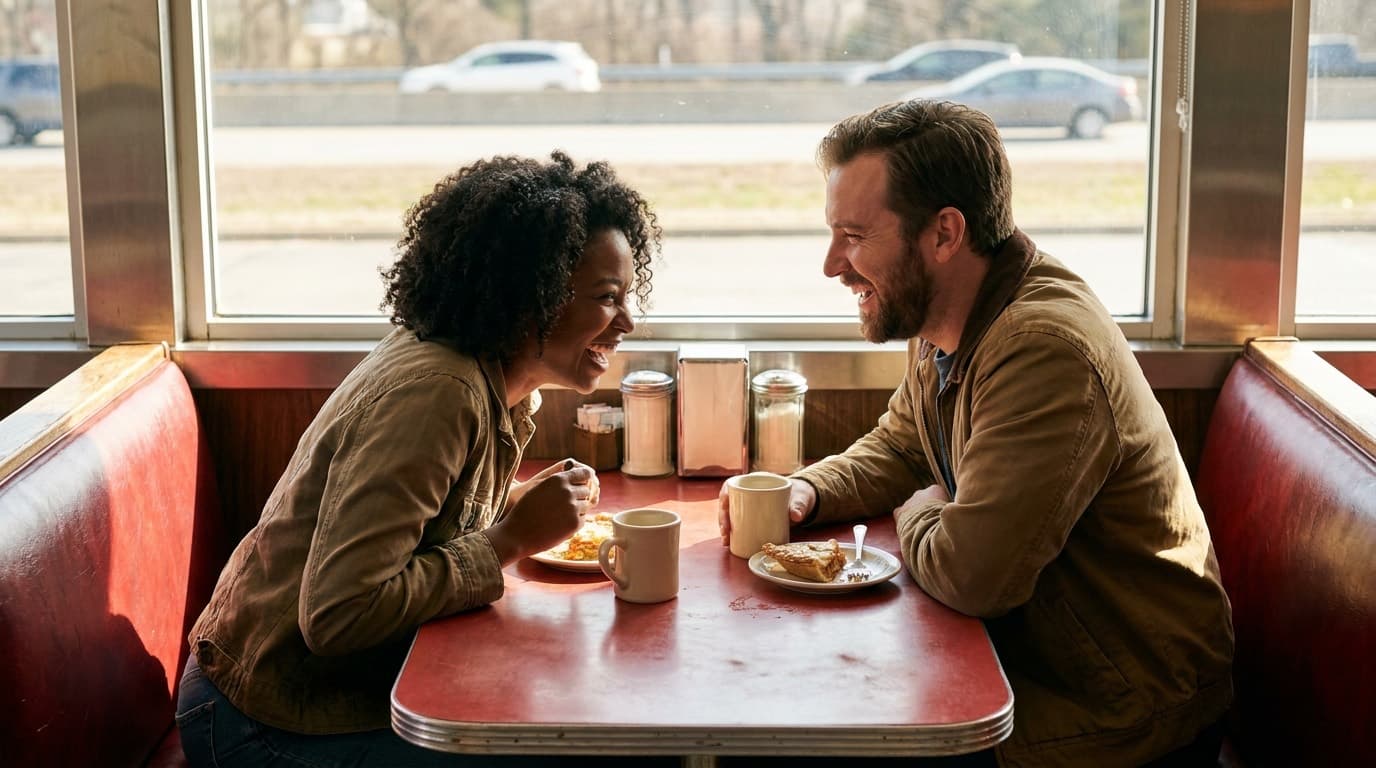
- Meet in the middle. For anyone more than half an hour away, suggest somewhere roughly halfway — a diner, a state park, a small-town main street. It is fairer, it shows effort, and it keeps the first meeting from feeling like an audition on someone else's home turf.
- Keep first dates public and your transport your own. This matters more the further you travel. Meet somewhere busy, tell a friend where you are going, and drive yourself so you can leave whenever you like.
- Look again next month. Local pools are not fixed. People join all the time, especially after moves, graduations and the turn of the year. A search that turned up nothing in March can look very different by June.
Start With the Map, Not the App
Two people with identical profiles, one in Houston and one in the ranch country of West Texas, need almost opposite strategies. One should narrow the search and move quickly; the other should widen it and be upfront about the drive. Neither of them needs to pay to find out who is out there.
So before you judge any platform, point it at the right piece of the map: your side of the city, your whole metro across whatever state lines it crosses, or your whole state if that is what it takes. Then apply the same test anywhere in the country — can you talk to someone near you without paying? If the answer is yes, as it is with free dating without payment on our platform, the only question left is where to look. And now you know that the answer starts with where you are.
Sources and Further Reading
-
Pew Research Center. "Key Findings About Online Dating in the U.S." Pew Research Center, February 2023. https://www.pewresearch.org/short-reads/2023/02/02/key-findings-about-online-dating-in-the-u-s/ — survey data on how many American adults have dated online, how many met a partner that way, and how many have paid.
-
Rosenfeld, M. J., Thomas, R. J. and Hausen, S. "Disintermediating Your Friends: How Online Dating in the United States Displaces Other Ways of Meeting." Proceedings of the National Academy of Sciences, 2019. https://www.pnas.org/doi/10.1073/pnas.1908630116 — the Stanford-led study showing online meeting overtaking introductions through friends among US couples.
-
U.S. Census Bureau. "Nation's Urban and Rural Populations Shift Following 2020 Census." Census.gov, December 2022. https://www.census.gov/newsroom/press-releases/2022/urban-rural-populations.html — the 80% urban figure and the criteria behind what counts as urban.
-
U.S. Census Bureau. "State Population Totals and Components of Change: 2020–2025." Census.gov. https://www.census.gov/data/tables/time-series/demo/popest/2020s-state-total.html — current population estimates for every state.
-
Federal Trade Commission. "Restore Online Shoppers' Confidence Act." FTC Legal Library. https://www.ftc.gov/legal-library/browse/statutes/restore-online-shoppers-confidence-act — the federal law governing disclosure and consent for recurring online charges.
-
California Legislative Information. "Business and Professions Code, Article 9: Automatic Purchase Renewals." leginfo.legislature.ca.gov. https://leginfo.legislature.ca.gov/faces/codes_displayText.xhtml?division=7.&chapter=1.&part=3.&lawCode=BPC&article=9. — California's automatic-renewal law, including the requirement that subscriptions taken out online can be cancelled online.