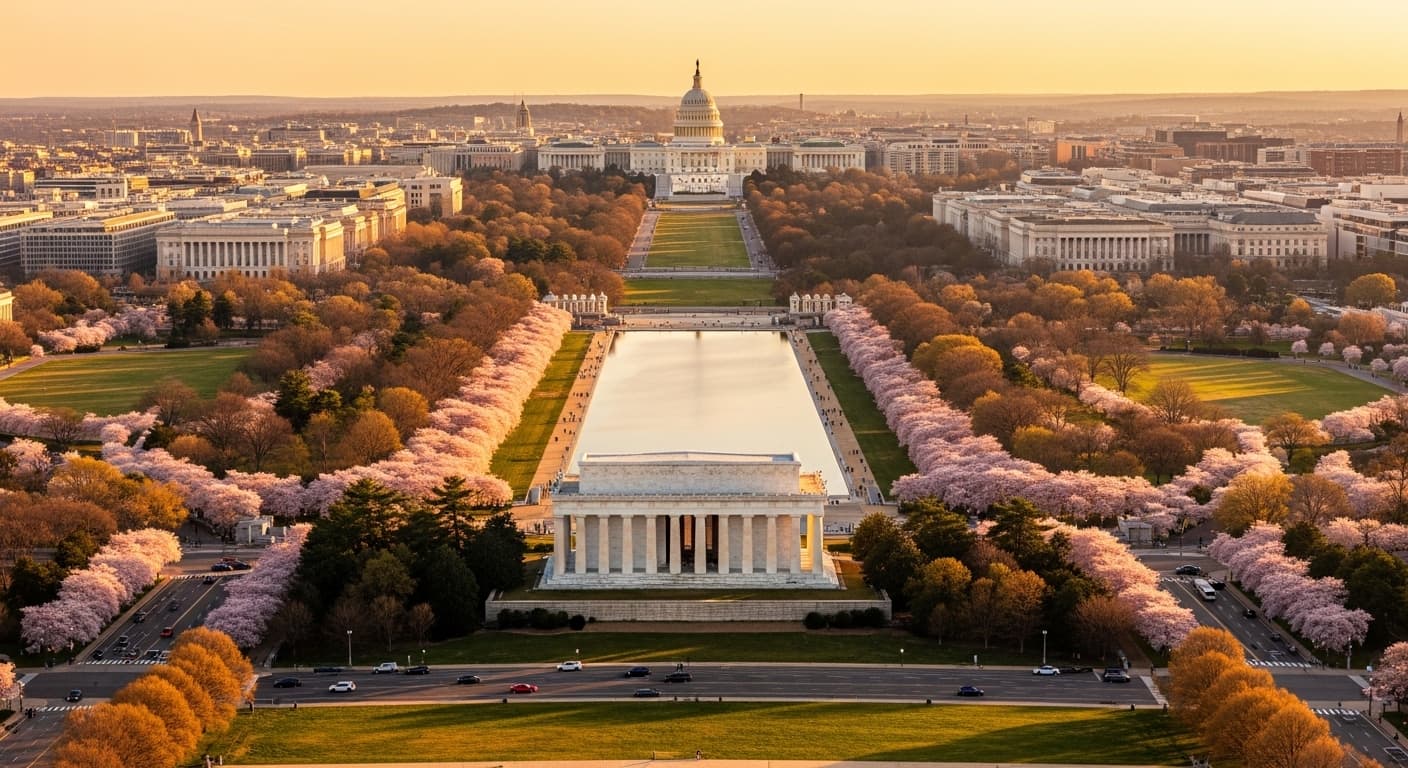
Washington DC is not a city that makes romantic connection easy — at least not on its own terms. It is a place of concentrated ambition, where people introduce themselves with their job title before their name, where conversations veer into policy before you have finished your first drink, and where the calendar fills up three weeks in advance with commitments that feel both mandatory and oddly joyless. The population turns over at a pace that reflects its transient political rhythms: every few years, a new administration arrives and the city reshuffles itself, pulling some people away and depositing others who are still learning which neighbourhoods are which.
Yet the DC dating scene is also richer and more human than this picture suggests. Beneath the surface of ambition and acronyms, there is a city that has invested enormously in its parks and cultural institutions and restaurant culture, and that has a working population — federal employees, lawyers, journalists, scientists at NIH, architects, doctors, teachers — whose ambition does not always crowd out the desire for genuine intimacy. Finding love in DC is not about cracking a code or finding the one right venue. It is about understanding how this city actually works, and adjusting your expectations and your approach accordingly.
Why Is Dating So Hard in Washington DC?
The first thing to understand about dating when you're busy in Washington DC is that the busyness itself is often performative. DC runs on a particular kind of professional prestige that treats being overcommitted as evidence of importance. "I've been slammed with hearings" or "I just got back from a trip to Brussels" function as social currencies in this city in a way that would read as showing off almost anywhere else. For dating purposes, this creates a specific problem: some of the busyness is real, and a significant portion of it is performed, and it is genuinely difficult from the outside to know which is which.
The practical consequence is that you should not take a slow reply or a postponed first date as necessarily meaningful evidence of disinterest. DC people are genuinely stretched thin — and they also sometimes need a reminder that their own social life is a thing worth prioritising. The relationships that survive here tend to belong to people who have made a deliberate decision to treat connection as non-negotiable, to carve out time for it the way they would carve out time for a congressional hearing or a grant deadline.
The second thing to understand is that DC has an unusually strong political filter on compatibility. This is not just a matter of avoiding disagreements about policy. The city's political culture shapes personality, humour, conversational style, and values in ways that run deeper than party affiliation. Someone who has spent a decade working for a senator on Capitol Hill and someone who works as a marine biologist at NOAA may share a postcode but inhabit rather different social worlds. This is not a reason for pessimism — it is simply a reason to be realistic about what genuine compatibility looks like here, and to be more curious about how people spend their daily working lives than you might be in a city where those lives were more uniform.
The Neighbourhoods That Shape the DC Dating Scene
DC is a city of highly differentiated neighbourhoods, and where you spend your unstructured time more or less determines who you encounter. Understanding this geography is one of the most useful things you can do for your dating life here.
Capitol Hill and Eastern Market
Capitol Hill is the most distinctively DC of all the city's neighbourhoods — staffers, lawyers, a few members of Congress, a lot of people who have been in the city long enough to have strong opinions about which brunch place is most reliable. The social life here is intense and cliquey in the way that comes with a neighbourhood where everyone's career is connected to the same institution. Eastern Market on a Saturday morning is the neighbourhood at its most sociable: a proper market with a loyal local following, good coffee, and the kind of unhurried weekend atmosphere that makes conversation possible.
Eastern Market is also one of the few places in DC where the transience of the city's population is less visible. The people who come back to the same market stall every weekend tend to be the people who have committed to the city rather than passing through it.
Dupont Circle
Dupont has long been the city's most cosmopolitan neighbourhood — international organisations, embassies, journalists, academics, and a long-established LGBTQ+ scene that gives the area a social openness that some other DC neighbourhoods lack. The bookshops and wine bars around Dupont Circle remain among the best first-date venues in the city: small enough to be intimate, interesting enough to generate conversation, and with enough foot traffic that arriving alone does not feel peculiar.
Kramerbooks — the legendary independent bookshop and café on Connecticut Avenue — is one of those places that functions as a genuine social hub, particularly on weekday evenings when the after-work crowd is still more interested in conversation than in getting somewhere else. If you are going to become a regular anywhere in DC, this is a strong candidate.
Adams Morgan and Columbia Heights
These adjacent neighbourhoods north of Dupont have a more eclectic, younger crowd than the Hill or Dupont. Adams Morgan in particular has a reputation for late-night life that somewhat obscures its weekday character: good independent restaurants, a serious brunch culture, and a residential population that is more diverse in terms of career and background than the Hill. Columbia Heights, further north, is even more genuinely mixed — a neighbourhood in transition, with a strong Latino commercial culture on 14th Street and a growing professional population that has followed the housing prices northward.
For dating in DC as a busy professional, both neighbourhoods offer something that is harder to find elsewhere in the city: the sense of a local scene that is not entirely organised around government and law.
Georgetown and Foggy Bottom
Georgetown is beautiful and expensive and socially rather more closed than it appears. It rewards people who are already embedded in its networks — old money, university connections, diplomatic circles — and can feel impenetrable to newcomers. Foggy Bottom is largely institutional (George Washington University, the State Department) and not especially rich in social infrastructure for adults who are not affiliated with those institutions.
Both are worth knowing for first dates — Georgetown's waterfront and bookshops are genuinely lovely — but neither is particularly fertile ground for building the kind of social ecosystem that makes meeting people a regular occurrence rather than an event.
Shaw, Logan Circle, and the 14th Street Corridor
This stretch of the city has been, for the last decade, the beating heart of DC's bar and restaurant scene. Shaw and Logan Circle have a density of interesting independent restaurants, wine bars, coffee shops, and nightlife that has no real equivalent elsewhere in the city. The population here skews younger and more creative than the Hill, and the social infrastructure — with places like Compass Coffee, Doi Moi, and a string of wine bars with serious-by-any-standard lists — is good enough to anchor a genuine local social life.
If you are new to the city and wondering where to build a life that has social texture independent of your professional commitments, the Shaw-Logan-14th Street corridor is the answer more often than not.
Where to Actually Meet People in Washington DC
Beyond apps, which are a starting point rather than a complete solution, certain types of venue and activity do disproportionate work in DC's social ecosystem.
The Cherry Blossom Season and Outdoor Life
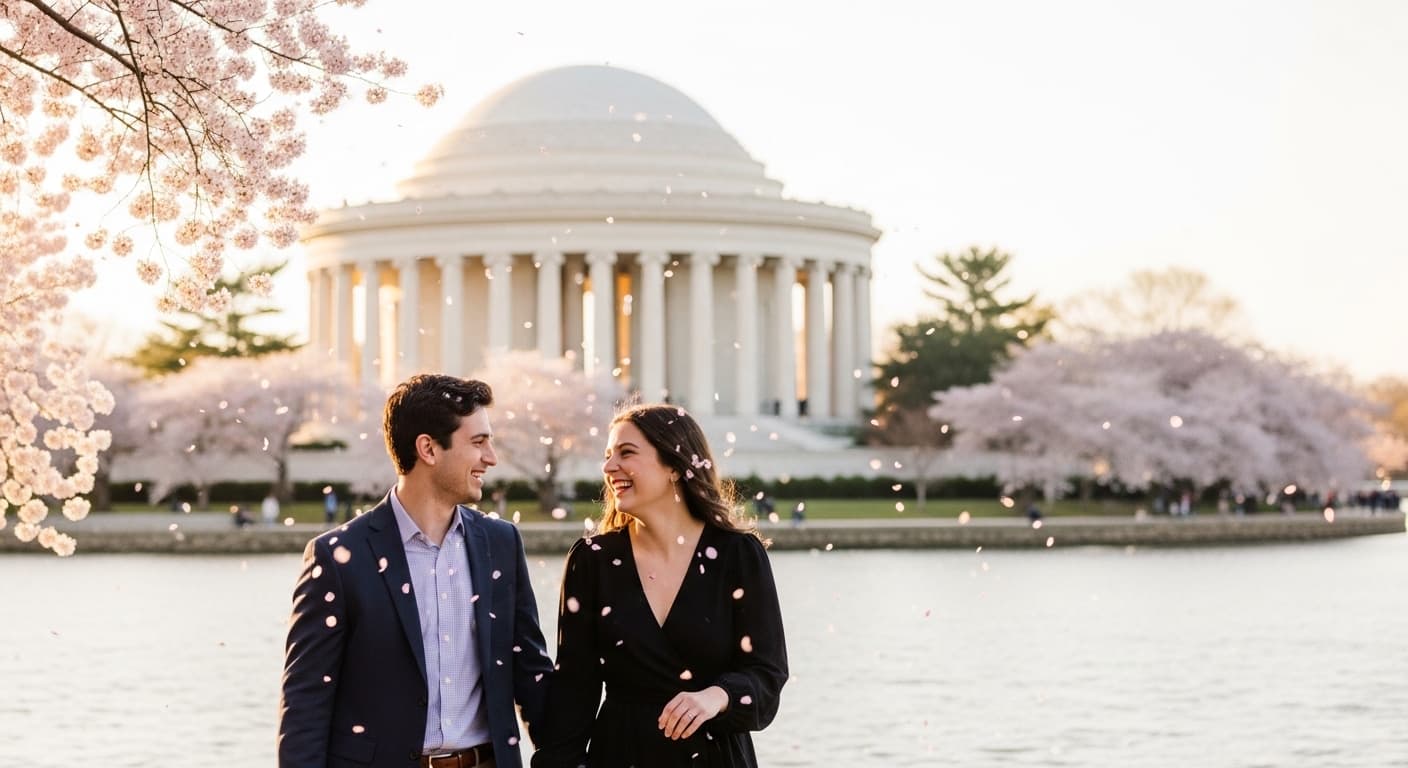
DC has one of the most spectacular springtime environments of any major American city, and the population knows it. The Tidal Basin during cherry blossom season — two or three weeks in late March and early April — draws a crowd that is simultaneously locals and tourists, but the locals are unmistakeable: the people who come back multiple times, who know which angle of the Jefferson Memorial catches the light best, who bring their own coffee rather than queuing at the overpriced stands.
The outdoor life of DC extends well beyond the Mall. Rock Creek Park, which runs the full length of the city from north to south, has a serious running and cycling culture that creates the kind of repeated contact that is difficult to engineer elsewhere. The towpath along the C&O Canal in Georgetown is another stretch that rewards regularity: show up on enough Saturday mornings and you will start to recognise faces.
Cultural Institutions as Social Infrastructure
DC has an almost embarrassing quantity of free and excellent cultural infrastructure, and it is largely underused as a social resource. The Smithsonian museums on the Mall are obvious — but their evening events, their members' nights, their film screenings and lectures, are the places where you encounter people who have chosen to be there rather than people who happened to walk past.
The Kennedy Centre runs a free Millennium Stage performance every evening at six o'clock: an hour of live music or theatre in the building's Grand Foyer, free to anyone who shows up. It is one of the most reliably pleasant ways to spend an early weekday evening in DC, and the crowd — a mix of tourists and locals, but with enough regulars that faces begin to repeat — is exactly the kind of mix that makes incidental conversation natural.
The National Portrait Gallery and the American Art Museum, which share a building in Penn Quarter, are among the best art museums in the country and have the added advantage of being perpetually less crowded than they deserve to be. Their atrium café and weekend programming draw a consistent local crowd. The Phillips Collection in Dupont — smaller, more intimate, and focused on European and American modern art — has a Sunday afternoon concert series that is one of DC's best-kept cultural secrets.
Neighbourhood Spots and the Regulars' Logic
The DC venues that consistently produce connections over time share a few characteristics: they are small enough that regulars become visible, they attract a consistent crowd, and they give people something to focus on other than each other. Here are a few worth knowing:
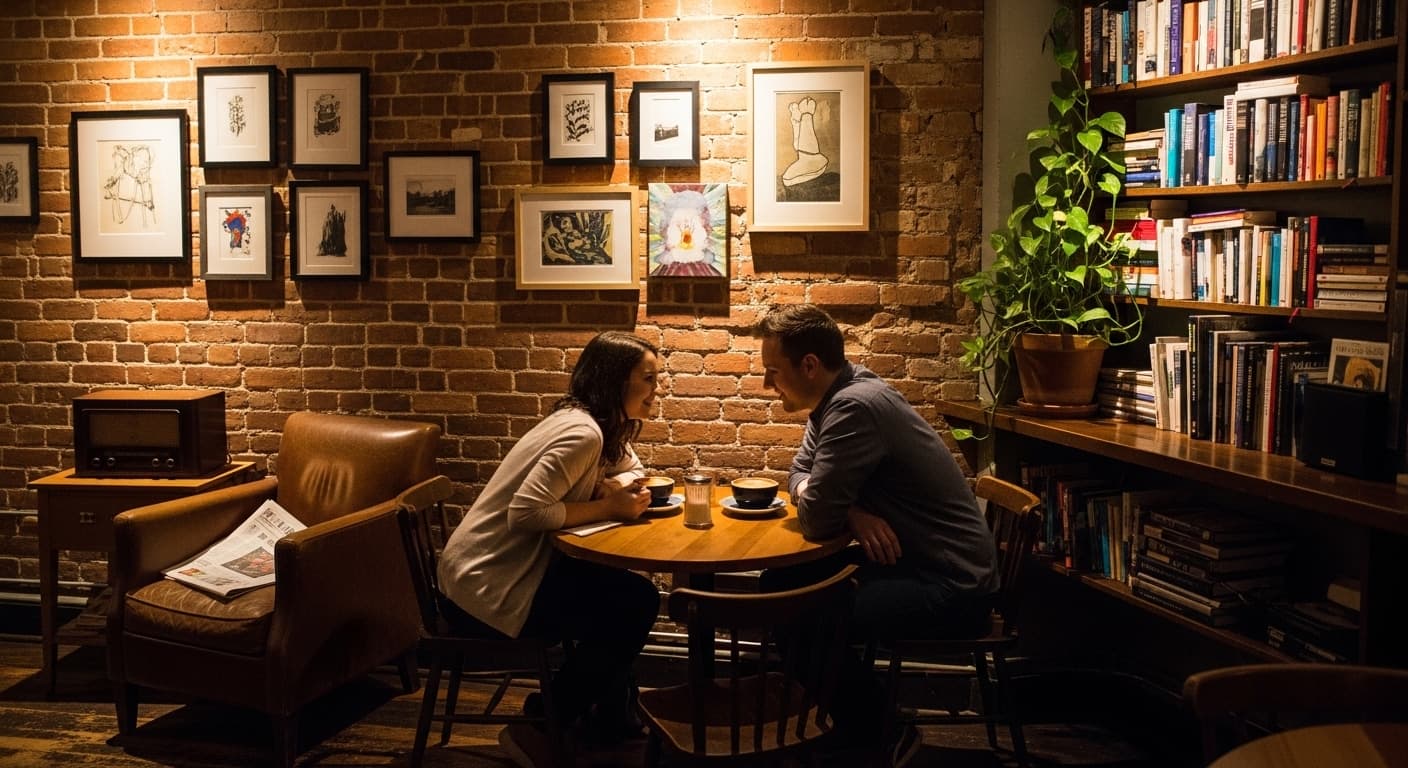
Politics and Prose on Connecticut Avenue is the city's most beloved independent bookshop, and its events programme — author readings, book groups, conversations with journalists and politicians — draws a loyal crowd that is curious, politically engaged, and comfortable being in a room of strangers. The café downstairs functions as a genuine gathering place on weekday mornings.
Busboys and Poets — with locations in multiple neighbourhoods including Shaw, Takoma, and Capitol Hill — is a café, bookshop, and events venue that functions as one of the most democratic social spaces in DC. The crowd is diverse in every meaningful sense, the events are genuinely interesting, and the format (coffee shop that transitions to evening events) means you can arrive alone at any time of day and find a reason to be there.
Right Proper Brewing in Shaw is one of those neighbourhood spots where the regulars' culture has stayed intact despite the surrounding area's gentrification. The beer is good, the food is serious, and the room has the kind of mix — creative professionals, local residents, a few people who live upstairs — that makes it more interesting than the average craft beer venue.
Running Clubs and Active Communities
DC has a very active running culture, and the running clubs that train on the Mall and in Rock Creek Park do enormous social work for exactly the reason that running clubs everywhere do: they create repeated contact between people who already share at least one interest, in a context that involves conversation (or at least companionable silence) without alcohol and without the self-consciousness of a formal social event.
The DC Road Runners Club is the largest, but the smaller neighbourhood running groups — the ones that post on local Facebook groups and meet outside specific coffee shops — often produce closer social bonds because their scale is human enough for relationships to form.
Work-Life Balance Dating in Washington DC
One of the particular challenges of dating when you're a busy professional in Washington DC is the city's culture of boundary erosion between professional and personal life. It is extremely common, in DC, to socialise almost exclusively with colleagues, people you have met through colleagues, or people who work in the same corner of the policy world as you do. This produces a social life that is comfortable and stimulating but also very narrow — and that makes the app-based first date, often with someone who works in a completely different field, feel like an unusually large social gap to bridge.
The adjustment that seems to help most in DC is deliberately investing in social activities that are not professionally adjacent. A pottery class where you are the only lawyer. A running group where you are the only congressional staffer. A bookshop event where nobody cares what committee you work for. These contexts are uncomfortable for approximately the first two sessions and then become among the most valuable social spaces in your life, precisely because they give you access to people who relate to you as a person rather than as a professional type.
The second adjustment is temporal. DC's professional culture front-loads the week with intensity and exhausts itself by Friday, which means that the conventional Thursday-evening date does not always work as well here as it does in other cities. Sunday afternoons — the farmers markets, the museum visits, the long brunches — tend to produce better quality social time in DC than the post-work drink that most people are already too depleted to properly enjoy. Build your dating life around the times when you are actually at your best, not around when convention says dates are supposed to happen.
Online Dating in Washington DC: What to Expect
Online dating in DC has specific characteristics that are worth understanding before you start.
The political filter is real. A significant proportion of DC dating app profiles include some version of "swipe left if you voted for [X]" — which is both understandable and, if you take it too seriously, severely limiting. The people who are most interesting to date in DC are often the ones who hold their politics with enough security that they do not need to use a dating app profile to enforce them. Treat explicit political statements in profiles as useful data, but do not mistake the absence of such statements for political incompatibility.
Turnover is high. A larger proportion of DC's dating app pool is in the city temporarily — on a two-year fellowship, a political appointment, a graduate programme — than in most comparable cities. This is neither good nor bad in itself, but it is worth understanding before you invest heavily in building a connection with someone who is going to be in London by October. Ask, gently but directly, how long someone sees themselves in DC. It is a reasonable question here, and most people are honest about it.
Free platforms have advantages in this market. Subscription-based dating apps attract a lot of DC users who are on them because their peer group is on them, not because they are particularly motivated to meet anyone. Free platforms — including iwillfindyou.love, which places no paywall on messaging — tend to attract people with more intentional reasons for being there. In a city where people's schedules are as compressed as they are in DC, the difference between someone who is genuinely seeking connection and someone who is vaguely browsing is significant.
Suggest something specific and close. DC has a public transport system that, by American standards, is actually functional — but it still takes long enough between neighbourhoods to function as a deterrent to first dates that require crossing the city. A first drink near the Metro stop you both use, rather than a restaurant in a third neighbourhood that involves a transfer, is meaningfully more likely to happen. Specificity matters: "Would you want to get coffee Saturday morning near Eastern Market?" is more likely to produce an actual meeting than "We should hang out sometime."
A Week in the DC Dating Life
If you want a concrete illustration of what a deliberate dating life in Washington DC might look like, here is a sketch.
- Tuesday morning: Coffee at Politics and Prose or Compass Coffee, before or after work, as a regular rather than a visitor. The staff start to know you after four visits; the familiar faces start to accumulate.
- Wednesday evening: A class or recurring activity — drawing, climbing at Earth Treks in Rockville, a language exchange at one of the Dupont cafés — that meets weekly and gives you something other than your professional life to show up for.
- Thursday after work: An event — a reading at Kramerbooks, a Millennium Stage performance at the Kennedy Centre, a neighbourhood gathering — rather than a drink in the same bar you always go to. The point is new rooms with people you have not already met.
- Saturday morning: Eastern Market or the Dupont Circle Farmers Market, slow enough to actually stop and talk, early enough to feel like you own the morning rather than the morning owning you.
- Sunday afternoon: A museum, a long walk along the C&O Canal, a brunch with friends at a place where you might also be introduced to someone new. The day that is genuinely yours rather than recovery from the week.
None of this is a dating programme in the conventional sense. It is a description of a social life with enough structure and variety that connection becomes more likely over time — which is the only kind of dating life that works sustainably in a city as demanding as this one.
The Long View
There is a version of the DC experience in which you arrive at twenty-five or thirty with enormous ambition, spend several years building a career that consumes everything you have, and emerge at thirty-five or forty wondering what happened to the personal life you meant to also be building. This version is very common here, and the people who have lived it mostly report that they wish someone had told them earlier that career success and personal connection are not competing priorities that resolve in favour of work — they are parallel investments that both require actual time and attention.
The DC dating scene is not kind to people who are waiting for their professional life to calm down before they invest in a personal one. It is genuinely generous to people who decide, with some deliberateness, that finding someone worth knowing is also a thing they are serious about — and who act accordingly.
The city has all the infrastructure you need. It has free world-class museums, a park system that rewards regularity, a restaurant culture that has genuinely arrived in the last decade, and enough people trying to do exactly what you are trying to do that the odds are much better than they sometimes feel. What it does not have is a mechanism that does the work for you. The work, as in most things here, is yours.
iwillfindyou.love is a free-to-message dating platform with no subscription required. You can browse, search, and message from day one — which, in a city as busy as Washington DC, is exactly the kind of friction-free start that makes a difference.
Further Reading
-
Alison Pugh. The Tumbleweed Society: Working and Caring in an Age of Insecurity. Oxford University Press, 2015. A sociologist's account of how professional instability shapes intimate life — particularly relevant to DC's transient political workforce.
-
Robert Putnam. Bowling Alone: The Collapse and Revival of American Community. Simon & Schuster, 2000. The foundational text on the decline of civic social infrastructure in American life, with direct relevance to why cities of concentrated ambition can feel isolating.
-
Arlie Hochschild. The Time Bind: When Work Becomes Home and Home Becomes Work. Metropolitan Books, 1997. Hochschild's account of how professional culture colonises personal time is somewhat dated in its specifics but still accurate in its diagnosis — particularly in a city like DC.
-
Eli Finkel. The All-or-Nothing Marriage: How the Best Marriages Work. Dutton, 2017. Research-grounded analysis of how modern mate-selection has evolved, with data on how urban professional culture shapes relationship expectations.
-
DC Office of Planning. DC 2050 Comprehensive Plan. https://planning.dc.gov. Useful background on the demographic and geographic character of DC's neighbourhoods, for anyone trying to understand how the city is actually structured beneath its political surface.