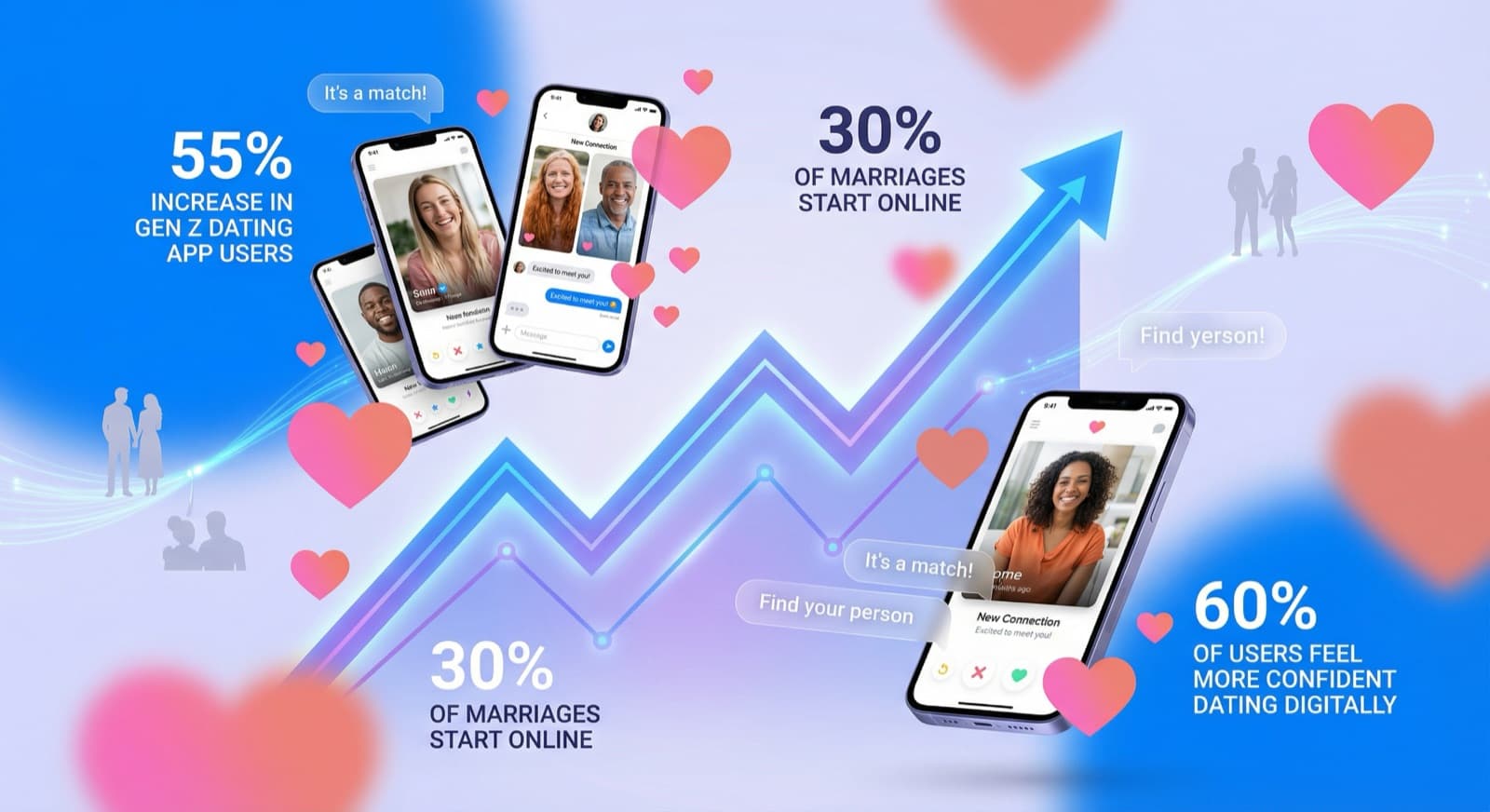
The landscape of online dating continues to evolve at a remarkable pace. As we navigate through 2026, the data reveals fascinating insights about how singles are connecting, what drives success, and where the industry is heading. Let's dive into the numbers that define modern digital romance.
The Growing Acceptance of Online Dating
Online dating has firmly established itself as a mainstream way to find love. 30% of U.S. adults have used dating apps or websites at some point in their lives, a significant increase from previous years. This growing acceptance spans across generations, though adoption rates vary considerably by age group.
The numbers tell a compelling story: what was once considered unconventional is now simply another way people meet. With 350 million users worldwide, online dating has become a global phenomenon that transcends borders and cultures.
Demographics: Who's Dating Online?
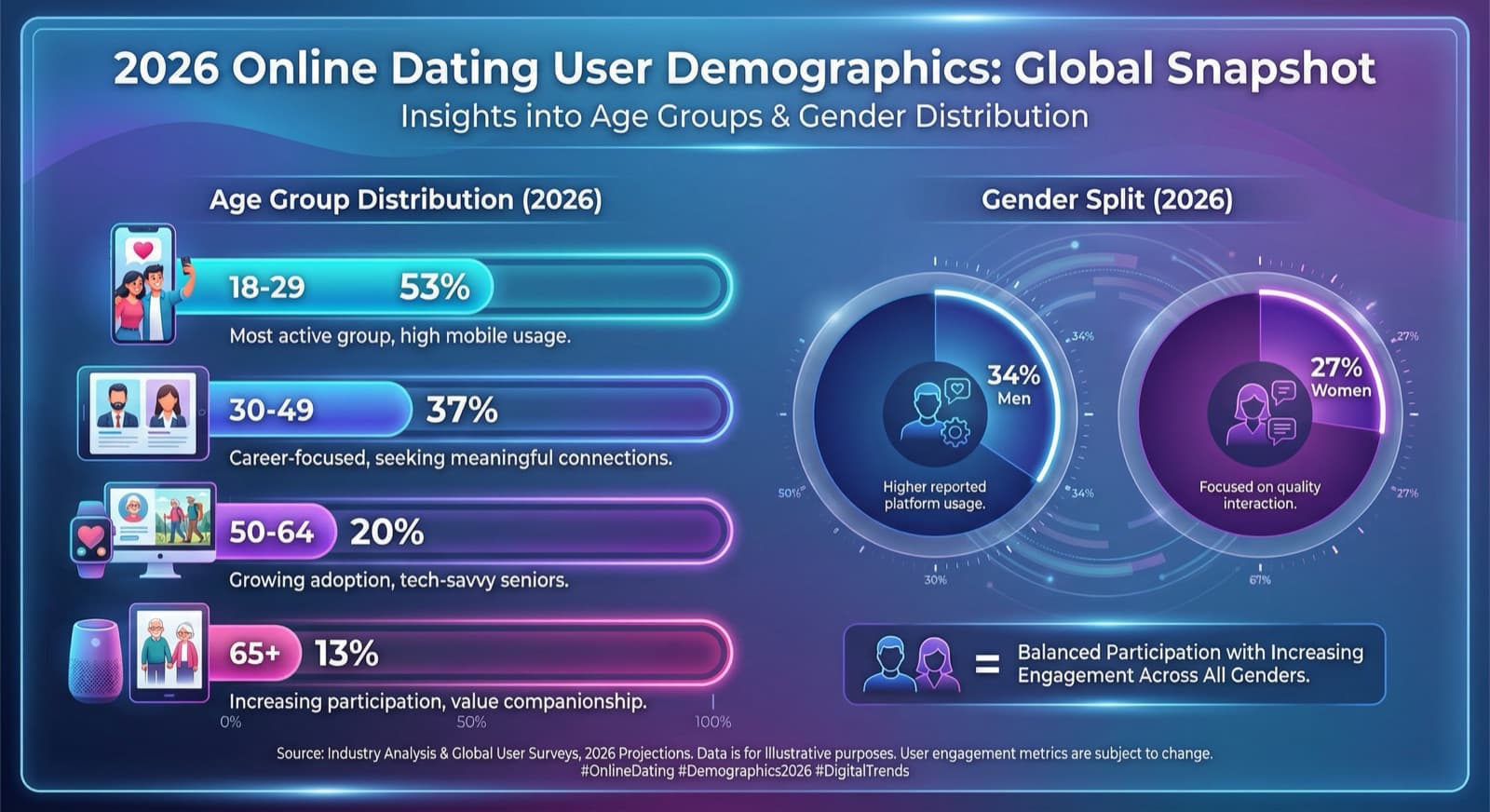
The demographic breakdown of online dating reveals interesting patterns about who's most likely to seek love online:
Age Matters
- 53% of adults aged 18-29 have tried online dating
- 37% of those aged 30-49 have used dating platforms
- 20% of 50-64 year olds have experimented with dating apps
- 13% of adults 65+ have ventured into online dating
The youngest generation leads the charge, having grown up with smartphones and apps as a natural extension of their social lives. However, it's encouraging to see adoption growing among older demographics, proving that love knows no age limit—even in the digital realm.
Gender and Identity
The gender split shows 34% of men use dating platforms compared to 27% of women. More significantly, 51% of LGB adults report online dating experience versus 28% of straight adults, highlighting how these platforms have become particularly important spaces for LGBTQ+ individuals to connect.
Location Influences Usage
Where you live affects your likelihood of using dating apps:
- 36% in urban areas actively use dating platforms
- 31% in suburban settings have tried online dating
- 25% in rural areas engage with dating apps
This urban-to-rural gradient likely reflects both population density (more potential matches in cities) and cultural attitudes toward technology-mediated relationships.
The Booming Market
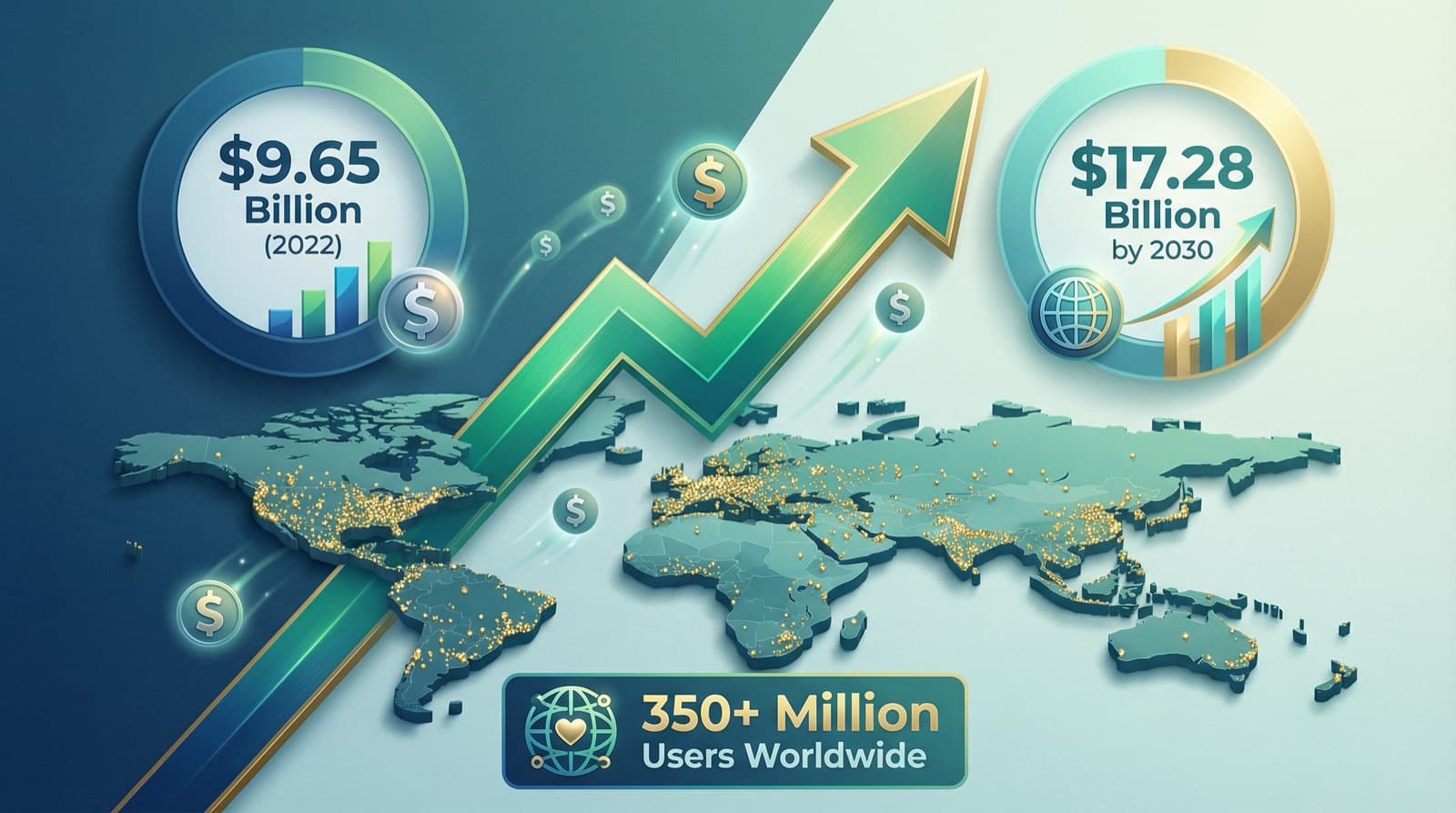
The online dating industry isn't just growing—it's exploding. The market size reached $9.65 billion in 2022 and is projected to hit $17.28 billion by 2030, representing a robust 7.4% compound annual growth rate.
Platform Leaders
- Tinder maintains its position as the most-downloaded app in the U.S. and Europe with 60 million active users
- Bumble gains 94,000 new users daily and facilitates 23 million weekly matches
- Hinge leads among couples who married in 2025, accounting for 36% of app-met relationships
- Match Group generated $3.5 billion in revenue in 2024
Regional Growth
The Asia-Pacific region is expected to grow at an impressive 8.5% annually through 2030, suggesting online dating is becoming increasingly global in its reach and cultural acceptance.
Success Stories: Does Online Dating Actually Work?
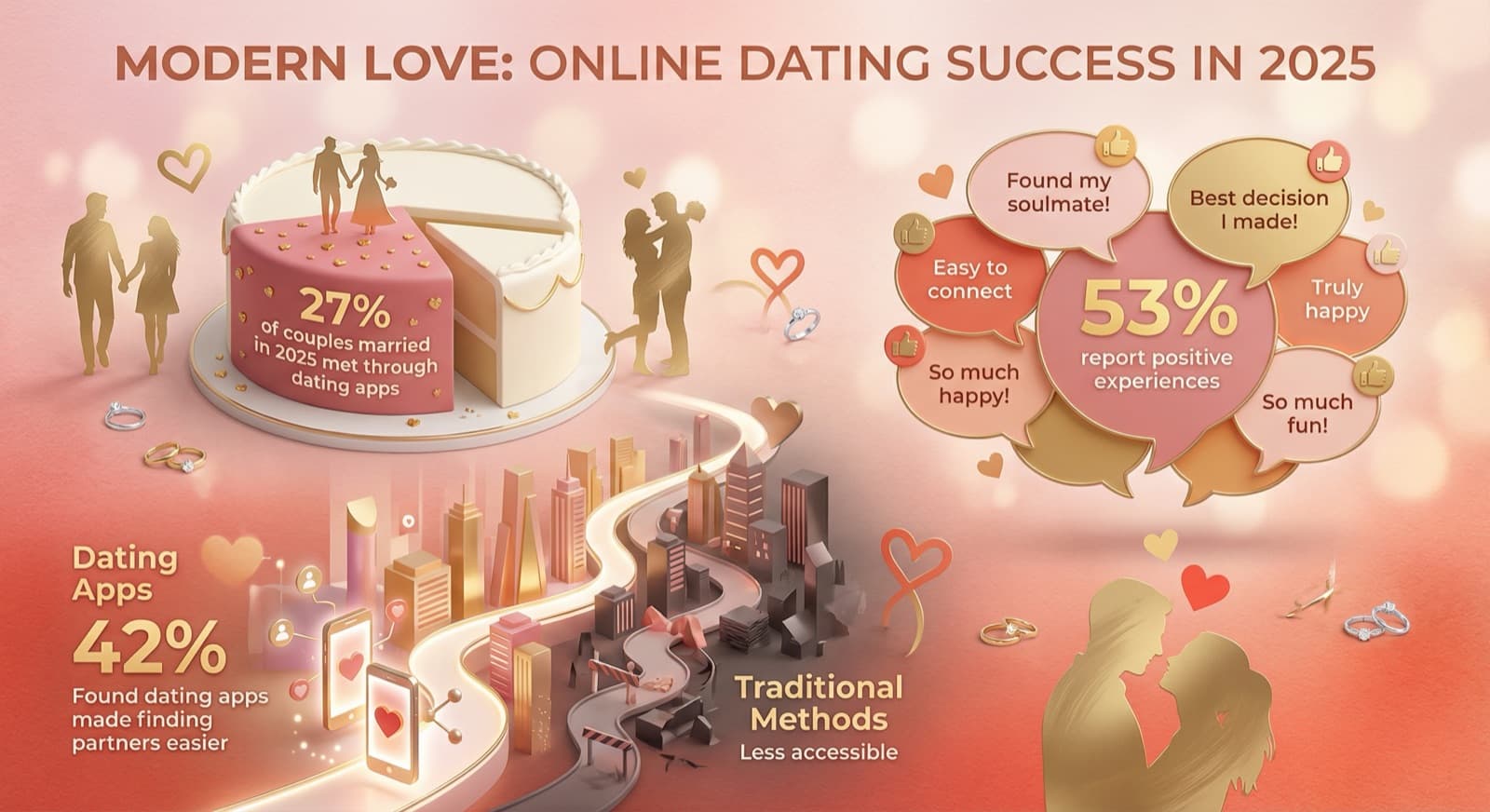
Perhaps the most important question for singles: does online dating actually lead to meaningful relationships? The data is encouraging:
Marriage and Lasting Relationships
27% of couples who married in 2025 met through dating apps or websites. This statistic is particularly impressive when you consider that mainstream online dating has only existed for about two decades. Among app-met couples specifically:
- 36% met on Hinge
- 25% connected through Tinder
- 20% found each other on Bumble
Additionally, 10% of currently partnered adults credit online dating with helping them find their significant other.
User Satisfaction
Overall sentiment toward online dating remains positive:
- 53% report positive experiences with dating platforms
- 42% feel dating apps made finding partners easier compared to traditional methods
- 61% of LGB users report positive experiences, slightly higher than the 53% of straight users
The Compatibility Question
While success rates are encouraging, users remain somewhat skeptical of algorithmic matchmaking: only 21% believe algorithms can accurately predict compatibility. This suggests people view dating apps more as tools for discovery than as sophisticated matching systems.
2026 Trends: A Shift Toward Authenticity
Recent survey data from 2025 reveals significant behavioral shifts that are defining the dating landscape in 2026:
Less Pressure, More Selectivity
Nearly one-third of women and one-fifth of men aren't seeking any relationship currently. This reflects reduced societal pressure to couple up compared to previous generations. People are increasingly comfortable being single and selective about who they choose to date.
Digital Fatigue Sets In
Despite the convenience of apps, singles overwhelmingly prefer meeting partners in person:
- Fewer than 20% of men prefer meeting potential partners on dating apps
- Only 12% of women favor app-based initial encounters
This suggests potential "app fatigue" and a desire for more organic, authentic connections.
The Celibacy Conversation
A significant portion of singles are embracing celibacy:
- 21.8% of women and 15.1% of men are voluntarily celibate
- 27.4% of men and 14.4% of women report being involuntarily celibate
These numbers indicate a complex dating landscape where not everyone is actively seeking romantic or sexual connections.
AI Skepticism
As artificial intelligence becomes more prominent, singles remain wary:
- Only 7.3% of women would use AI to enhance their sex life
- Just 13.8% would use AI to find compatible partners
This suggests people want genuine human connections, not AI-mediated or enhanced interactions.
What People Really Want
When it comes to desired traits in partners, honesty ranks first for both genders. However, men continue to prioritize physical attraction more highly than women do. This emphasis on authenticity and honesty aligns with the broader trend toward genuine connections.
The Safety Concerns
While online dating offers tremendous opportunities, safety remains a significant concern:
Harassment and Abuse
- 50%+ of users experienced some problem on dating platforms
- 50%+ of women under 50 received unwanted explicit content
- 33% report harassment or abuse from app contacts
Scams and Financial Losses
Romance scams continue to plague the industry:
- 70,000 romance scam victims reported incidents in 2022
- $1.14 billion in losses by 2024
Declining Sense of Safety
User confidence in platform safety is declining: only 48% feel safe dating online, down from 53% in 2019. This highlights the need for platforms to prioritize user safety and implement stronger verification and protection measures.
What This Means for Singles in 2026
The data paints a nuanced picture of online dating in 2026:
The Good News:
- Online dating is more accepted and mainstream than ever
- Success rates are encouraging, with over a quarter of recent marriages starting online
- The industry continues to grow and innovate
- Platform options cater to diverse preferences and communities
The Challenges:
- Safety concerns persist and need addressing
- Users are experiencing digital fatigue
- Skepticism about algorithmic matching remains
- Harassment and scams continue to affect user experiences
The Trend: People are seeking authenticity over convenience. The emerging preference for in-person meetings and emphasis on honesty suggests that while apps facilitate initial discovery, singles ultimately want genuine human connections.
Looking Ahead
As we move deeper into 2026, the online dating industry stands at an interesting crossroads. While the market continues to expand and new users join daily, there's a growing desire for more authentic, meaningful connections that transcend the swipe-based superficiality that has characterized many platforms.
The most successful dating platforms of the future will likely be those that:
- Prioritize user safety and verification
- Facilitate genuine connections rather than endless browsing
- Respect user preferences for authentic interactions
- Bridge the gap between digital discovery and real-world meeting
For singles navigating this landscape, the message is clear: online dating is a legitimate and effective tool for finding love, but success requires being authentic, selective, and safety-conscious. The data shows that meaningful relationships can and do begin online—but they flourish when both people bring their genuine selves to the connection.
Your Turn
Whether you're a seasoned online dater or considering trying it for the first time, these statistics reveal that you're in good company. Millions of people worldwide are using these platforms to find everything from casual dates to life partners.
Ready to become part of the success statistics? Join iwillfindyou.love and start writing your own digital love story today.
Sources
- The Public and Online Dating in 2025 - SSRS
- The State Of Dating Entering 2026 - Sex and Psychology
- 35+ Online Dating Statistics 2026: Facts, Trends and Insights - Cloudwards
- 27 Online Dating Statistics in 2025 - DatingNews
- Couples Married in 2025 Met on Dating Apps - Freedom For All Americans
- Online Dating Statistics of 2025: Trends and Insights - DaterSearch
- Tinder Statistics 2026 - DemandSage
- Dating App Statistics & Facts Worldwide 2025 - Octal Software
- Key findings about online dating in the U.S. - Pew Research Center
- Dating App Revenue and Usage Statistics 2026 - Business of Apps