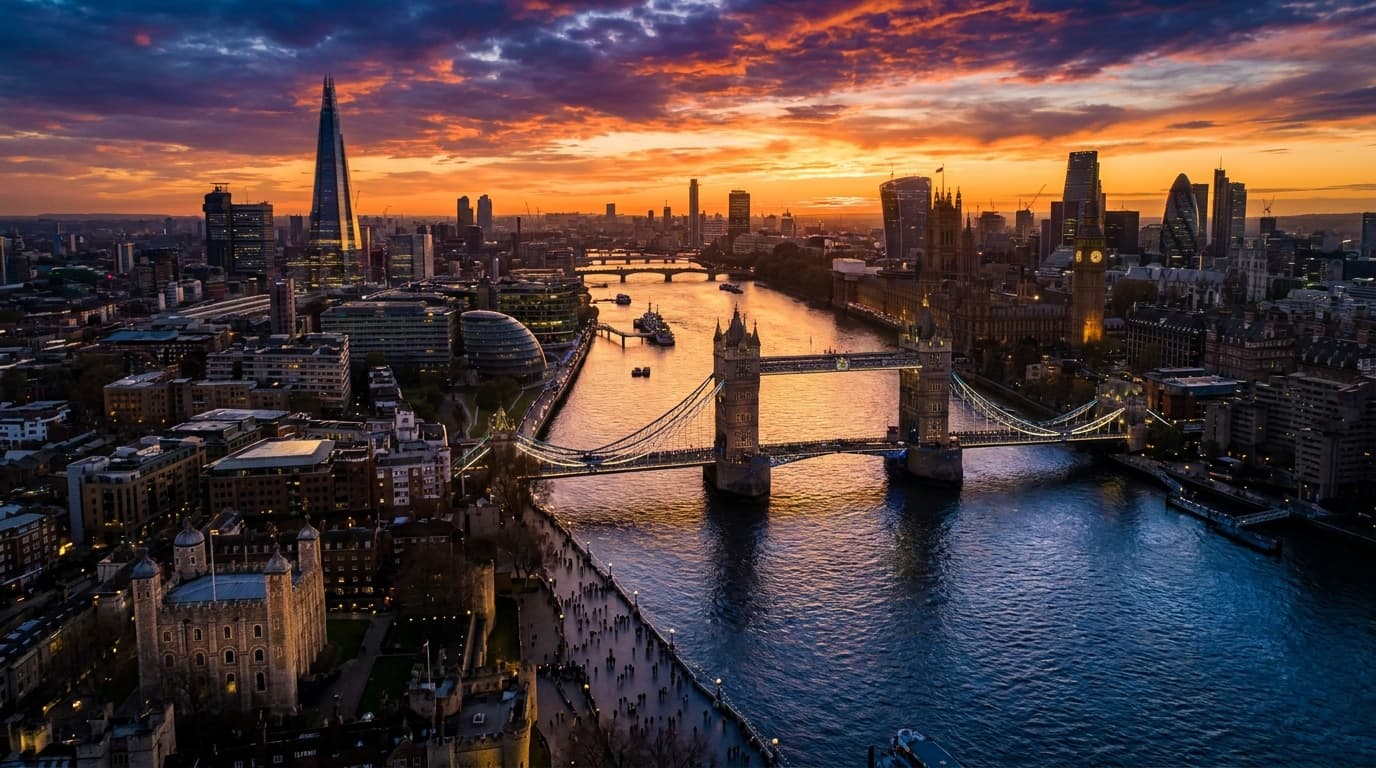
You would think that nine million people would make finding someone straightforward. Nine million potential connections, spread across thirty-three boroughs, crammed onto the Central line and the Northern line and the Overground and the DLR, buying flat whites in Peckham and pints in Stoke Newington and sourdough bread in Bermondsey. Statistically, compatibility should not be difficult to find.
And yet London is one of the hardest cities on earth to actually meet someone in. The very density and pace of the place — the quality that makes it endlessly interesting — also makes it strangely isolating. People pass within centimetres of each other on the tube and make no eye contact. Entire neighbourhoods turn over in a matter of years as rents rise and young professionals move outwards and inwards in a constant circulation that prevents any but the most deliberate social roots from taking hold. The city rewards ambition and motion and the permanent readiness to absorb something new; it punishes the kind of slow, repeated contact that tends to precede genuine connection.
Understanding why London online dating is harder than it should be is the first step to doing it more successfully.
The Specific Difficulties of London Dating
The Scale Problem
The paradox at the heart of London online dating is that abundance produces paralysis. A dating platform that surfaces four thousand potential matches within ten miles is not more useful than one that surfaces forty — it is, in practice, less useful, because the scale of the choice makes commitment to any single option feel premature. Why invest in this conversation when the next one might be better? The result is a dating culture of perpetual browsing, in which genuine investment in another person gets deferred indefinitely.
This is not unique to London, but it is more acute here than in smaller cities, because the numbers are genuinely large enough to make the infinity of choice feel real rather than hypothetical. The most practically useful adjustment you can make to London online dating is to artificially constrain your own options: commit to a smaller geographic radius than the platform allows, decide in advance that you are going to pursue three conversations thoroughly rather than thirty superficially, and treat the first meeting as something you try to arrange within the first week of conversation rather than a distant aspiration.
The Transience Problem
London's population turns over at a remarkable rate. The city is simultaneously a permanent home for millions of people who have been here for decades and a transit point for another enormous cohort who are here for a year or two before moving somewhere more affordable or closer to home. Australians, South Africans, Americans on company secondments, EU citizens who came for work and stayed until circumstances changed — these make up a significant proportion of any London dating app pool.
This is not a reason for pessimism about those people specifically. Some of the most genuine and interesting connections happen precisely when two people are in the same transient phase and know it. But it is worth understanding the landscape before you invest heavily in a connection, and it is a reasonable thing to establish early in a conversation: whether someone sees London as home or as a chapter.
The London Reserve Problem
There is a quality of social guardedness in London that is not exactly unfriendliness — Londoners are not unfriendly — but which makes the incidental social contact that populates the dating life of smaller cities extremely rare here. You do not talk to strangers on the tube. You do not strike up conversations in coffee shops. You do not approach someone reading a book you recognise in a park. The social contract of the city is that public space is private space, and breaching it is not exactly forbidden but does require a specific kind of social boldness that most people do not default to.
The consequence is that online dating carries more of the weight of London's romantic ecosystem than it does in cities where meeting people by chance is a more viable option. This is one reason London has been among the highest-adopting markets for dating platforms in the world: it is not that Londoners are lonelier than people elsewhere, but that the city's social architecture routes more of the meeting of strangers through digital channels than through the physical ones that other cities rely on.

What Actually Works for Online Dating in London
Neighbourhood Over Proximity
One of the most practical pieces of advice for London online dating is to pay more attention to neighbourhood than to distance in kilometres. Three kilometres in London can mean a forty-minute journey involving a bus replacement service and an unexpected walk, or it can mean two stops on the tube and a ten-minute walk. The same distance filters in a dating app will produce wildly different results depending on whether both people live along the same line.
More importantly, neighbourhood is actually a useful proxy for something real about how people live. Someone who lives in Hackney and someone who lives in Richmond may both be excellent people but inhabit such different versions of London — in pace, in culture, in daily life — that the city may as well have placed them in separate settlements. Paying attention to where people actually live, and what they say about it, gives you far more useful information than a radius filter.
Specificity and Speed
The research on what makes online conversations in cities like London lead to actual meetings is fairly consistent: the conversations that go somewhere are the ones in which someone suggests a specific meeting, at a specific time and place, within the first week. "We should meet for coffee sometime" produces a different outcome than "Are you free Saturday morning? There's a good coffee place near Old Street I've been meaning to try."
The specificity does the work. It eliminates the possibility that both people are waiting for the other to commit, which is the default stasis of a lot of London online dating. It also tests something real: whether the person on the other end of the conversation is actually available and interested enough to make a concrete plan, rather than indefinitely deferring to a hypothetical future meeting.
In a city with as much going on as London, the calendar fills up very quickly. Someone who does not commit to a specific time and place within the first week is probably not going to commit in the second or third week either.
The First-Date Venue
The geography of a first date matters more in London than almost anywhere else, because the city is large enough that the choice of venue effectively determines which of you has to make an effort. The most successful first dates in London tend to happen somewhere that is genuinely convenient for both people — which in practice usually means within fifteen minutes of where at least one of you lives or works.
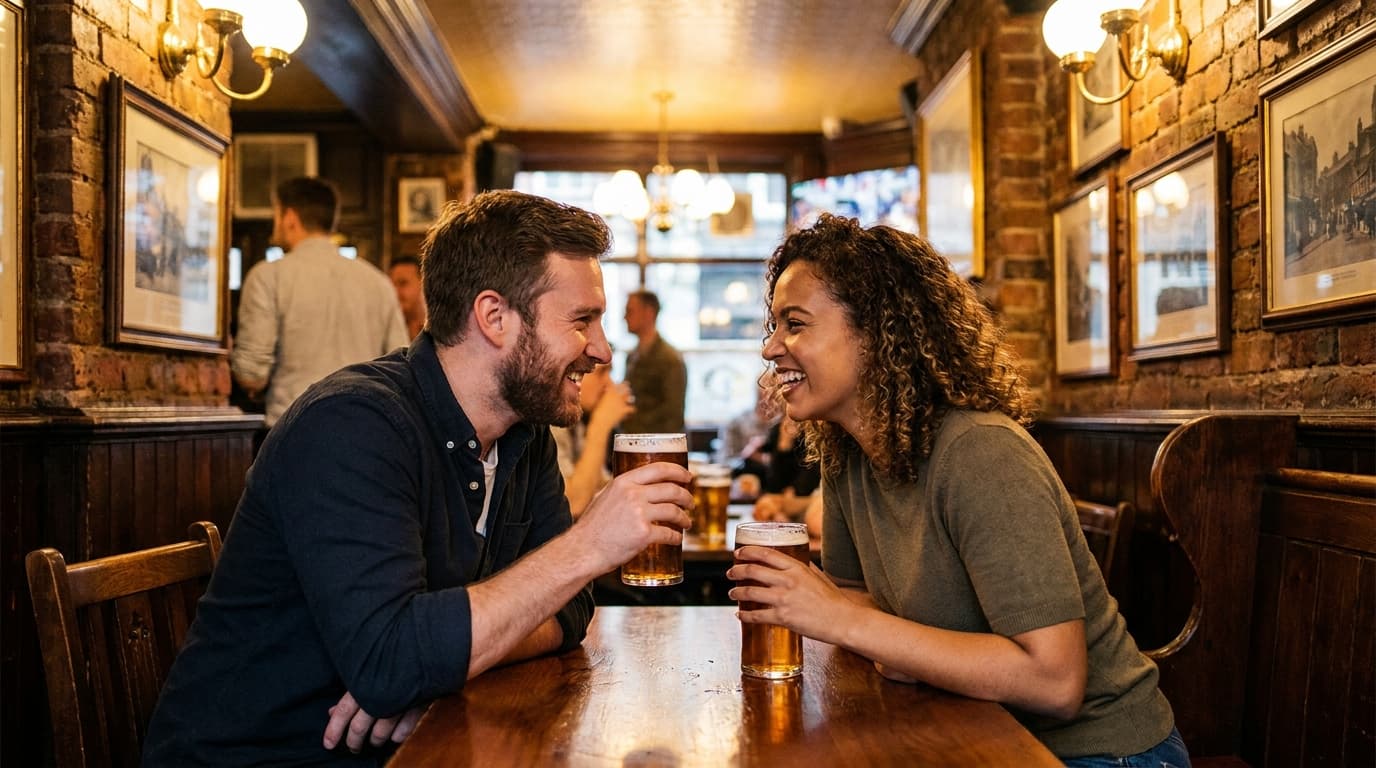
A first date that requires either of you to travel forty-five minutes across the city starts with a deficit of effort that can skew the dynamic before you have even sat down. Something easy, local, and low-stakes — a pub with a garden, a café with reasonable noise levels, a walk along the canal followed by a drink — tends to produce better first-date experiences than an elaborate evening in a restaurant in a neutral third neighbourhood.
Avoiding the Parallel Processing Trap
One of the specific difficulties of London online dating is that the scale of the market makes it easy to run multiple conversations simultaneously, which sounds like a rational strategy but in practice tends to produce worse outcomes than running fewer conversations more thoroughly. Multiple parallel conversations produce a kind of split attention that is detectable on the other end: the slightly formulaic replies, the delayed responses, the sense that this person is managing a portfolio of possibilities rather than genuinely curious about you.
The people who do best at online dating in London tend to be those who pick a smaller number of conversations, invest in them properly, and move quickly from conversation to meeting. The meeting is the only way to determine whether chemistry is real; all the conversation in the world beforehand is preparation for something that can only happen in person.
The London Dating Scene: Neighbourhoods and What They Reveal
East London
Hackney, Dalston, Bethnal Green, Peckham over the border in south-east — this is the part of London that houses an enormous proportion of the city's creative and professional under-forty population. The social scene here is cafe-and-pub centred, neighbourhood-identified, and has a culture of local loyalty that gives it more texture than the more transient zones of the city. People in east London tend to know their local coffee shop, their local pub, the market they go to on a Saturday; this rootedness makes it somewhat easier to build the kind of repeated contact that precedes relationship than in zones where people are simply moving through.
If your dating app shows you a high proportion of profiles from Hackney and Peckham, take that as a mildly positive signal about how settled in London they are likely to be.
North London
Islington, Stoke Newington, Crouch End, Highbury — north London has a slightly older demographic than east London, with more families but also more people who came for a year or two in their late twenties and found themselves still there a decade later. The social scene is pub-heavy and neighbourhood-loyal in ways similar to east London but with a slightly more settled, less experimental quality.
Camden Town and Kentish Town occupy a middle ground: younger crowd, more live music, more of the London that exists in the popular imagination rather than the lived reality of most Londoners.
South London
Brixton, Clapham, Battersea, South Bank — south London is underrated as a dating geography, partly because its reputation in the north of the city is still shaped by the memory of a time before the Northern line was extended to Battersea. The density of good restaurants and bars in Brixton Village, the relative calm of Dulwich and Forest Hill, the serious coffee culture around Bermondsey and Borough — this is not the London that people picture when they think of south London, but it is the London that exists.
Clapham is the part of south London that has the highest concentration of young professionals from outside London who have arrived, settled, and mostly socialised with other people who look exactly like them. It is a good place to find people at the start of their London life; it is less good for people who have been here long enough to want something beyond it.
West London
Notting Hill, Shepherd's Bush, Hammersmith, Chiswick — west London is harder to generalise about because it is more fragmented and more economically varied than east or north. The Portobello Road market on a Saturday still draws the kind of local crowd that makes it one of the better incidental social spaces in the city. The pubs along the Thames in Richmond and Hammersmith are among the most pleasant first-date venues in London, partly because they are genuinely beautiful and partly because they are far enough from the intensity of central London to feel like a different city entirely.
Making London Online Dating Work
The honest answer to why online dating in London is harder than it should be is that the city's scale and pace create conditions that require more deliberate effort to overcome than they do in smaller, slower places. The abundance of people makes commitment feel premature; the transience of the population makes rootedness difficult; the social culture of the city routes almost everything through digital channels and makes incidental connection rare.
None of this is insurmountable. The Londoners who navigate this best tend to share a few characteristics: they move quickly from conversation to meeting, they treat the city's geography as something to work with rather than against, they invest in a smaller number of connections properly rather than maintaining a large portfolio of half-started conversations, and they have developed a social life that gives them enough exposure to new people that online dating is one channel among several rather than the whole answer.
iwillfindyou.love is a free-to-message dating platform that works particularly well for London because it places no paywall on conversation — you can message from day one without any subscription. In a city where the difference between a motivated dater and a casual browser matters, that distinction is significant.
The city rewards the people who commit to it. That applies to the career and to the social life in equal measure.
Further Reading
-
Kate Fox. Watching the English: The Hidden Rules of English Behaviour. Hodder & Stoughton, 2004. The most readable and accurate account of why English social culture is the way it is — including the guardedness that shapes London's dating environment.
-
Lynsey Hanley. Estates: An Intimate History. Granta, 2007. A deeply personal account of how geography shapes social life and identity in British cities, with obvious implications for how neighbourhood determines London's social world.
-
Danny Dorling. All That Is Solid: How the Great Housing Disaster Defines Our Times, and What We Can Do About It. Allen Lane, 2014. Essential context for understanding how London's housing market shapes who lives where and for how long — which in turn shapes who you are likely to meet and how settled they are likely to be.
-
Eli Finkel. The All-or-Nothing Marriage: How the Best Marriages Work. Dutton, 2017. Research-grounded analysis of how urban professional culture shapes relationship expectations — directly applicable to London's highly educated, career-focused dating pool.
-
Transport for London. Travel in London Report. https://tfl.gov.uk. For understanding journey times between neighbourhoods — which is, in practice, one of the most important variables in London first-date logistics.