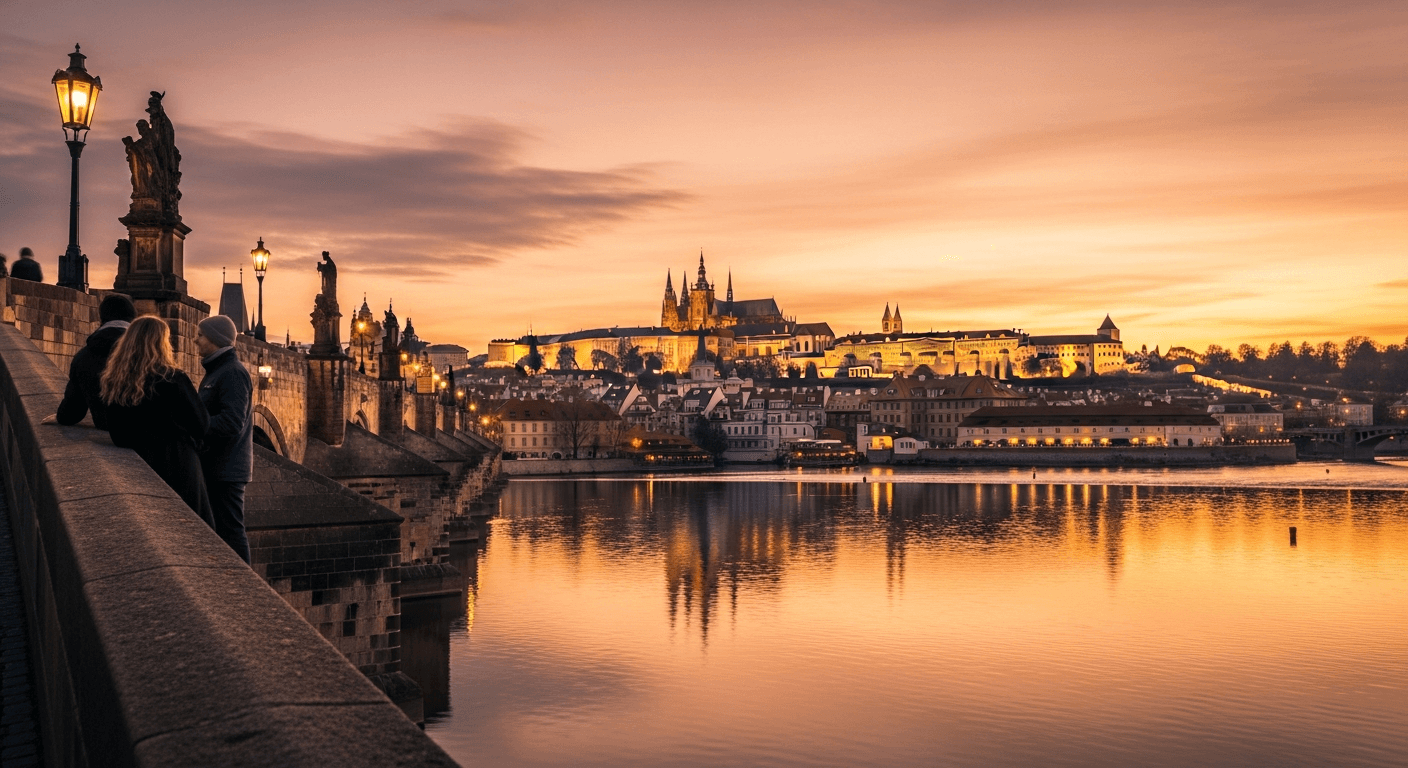
There is something almost unfair about Prague. It is, by almost any measure, one of the most beautiful cities on the continent — the kind of place that was purpose-built, it seems, for falling in love. The medieval spires of Malá Strana, the curve of Charles Bridge at dusk, the golden light that catches the terracotta rooftops of Vinohrady on a summer evening: it all creates an atmosphere so inherently romantic that people who move here expecting to find love almost immediately are not being unreasonable.
And then the reality sets in.
Prague is a city of layers. On the surface, it is extraordinarily international — a place where English is spoken everywhere, where the expat community is dense and active, where the tourism infrastructure is so well developed that a first-time visitor can feel comfortable within hours. But underneath that accessible exterior is a social culture that is considerably more reserved, more private, and more difficult to penetrate than most foreigners expect. The Czechs are warm, funny, and fiercely loyal once you know them — but getting to know them, particularly romantically, requires patience and a different approach than what tends to work in London or New York or Melbourne.
This is the thing that most expat guides to Prague get wrong. They describe the city, the bars, the festivals. They do not explain the social dynamics — the particular rhythms and unwritten rules that determine whether you spend your time here in a warm, connected social life or in a comfortable but ultimately lonely bubble of other expats.
Why Prague Is Not What Most Foreigners Expect
The first thing to understand about Czech social culture is that it runs on established trust. Czechs, as a general rule, are not people who open up quickly to strangers. This is not rudeness — it is a genuine cultural characteristic, one with deep historical roots in a country that spent decades under a political system where trusting the wrong person had real consequences. The result is a population that is extraordinarily loyal to close friends and family, and considerably more guarded with everyone else.
For a foreigner arriving in Prague with the usual Western assumptions about social life — that friendliness in a bar means openness, that a good conversation is an invitation to a friendship, that expressing interest directly is appreciated — this can be genuinely confusing. The Czech woman who laughed at your jokes and talked to you for an hour at a party is not necessarily flirting. The Czech man who seemed engaged and warm at a work event is not necessarily suggesting ongoing contact. Both of them may simply have been being polite in the Czech sense, which involves more substance than politeness in many cultures, but carries no particular romantic implication.
This is not a barrier to connection. It is a context for it. Once you understand that Czech social culture rewards patience and repeated contact rather than immediate intensity, the path forward becomes much clearer.
The Expat Bubble Problem
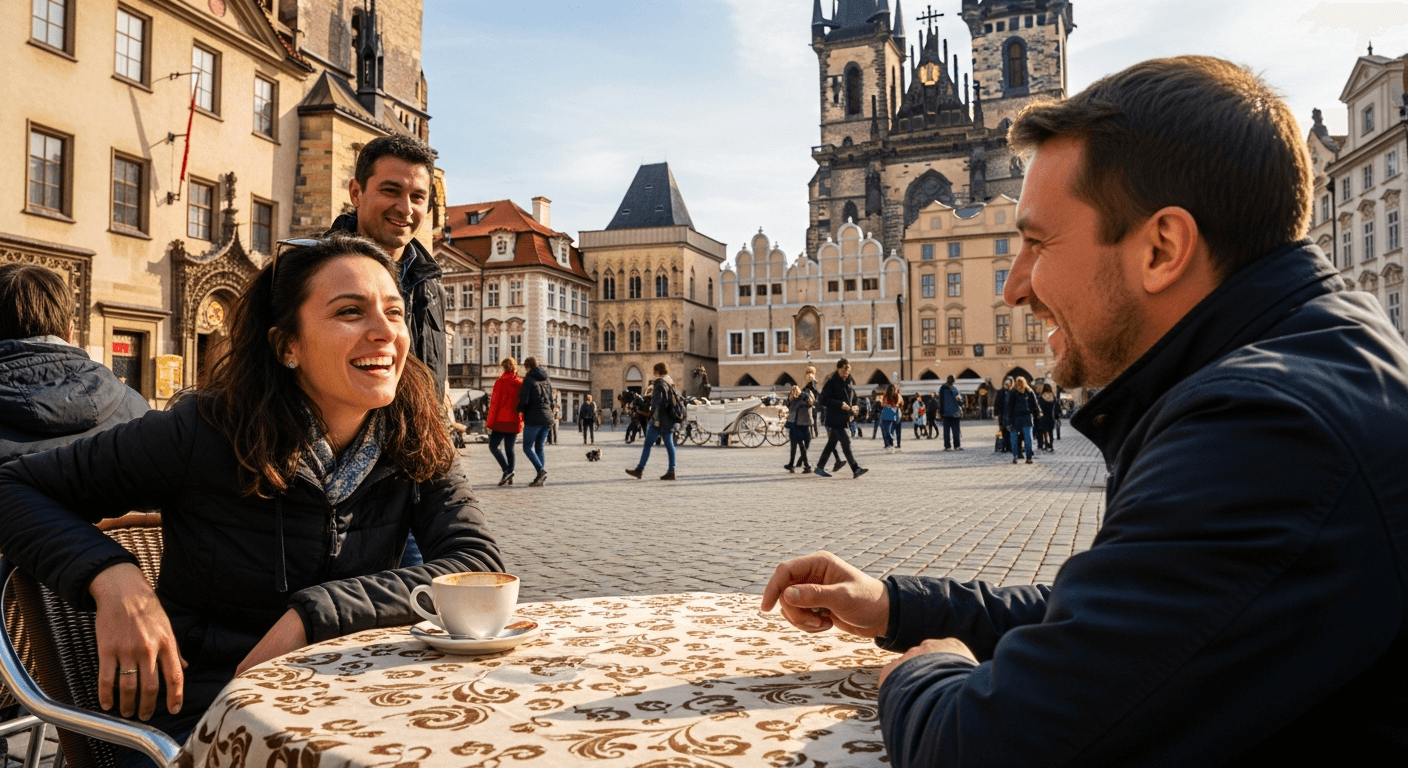
Every major European city has an expat bubble, but Prague's is particularly pronounced, for reasons that are partly historical and partly structural. The city has been one of Europe's most popular expat destinations since the early 1990s, and the infrastructure built up around that — the English-language bars, the international schools, the professional networking events conducted entirely in English, the Facebook groups and Discord servers and WhatsApp communities that connect arrivals within days of landing — creates a social world that is entirely liveable without ever requiring meaningful contact with Czech society.
The expat bubble is not a bad thing. It provides community, support, and friendships that can be genuine and lasting. But if what you want is to meet someone Czech — or even to meet expats who have actually integrated rather than simply relocated — the bubble is a ceiling as much as a floor.
The people who form meaningful romantic connections in Prague, both with Czechs and with other expats who have genuinely settled, tend to be the ones who have made a deliberate decision to exist outside the bubble as much as within it. This is not about rejecting the expat community — it is about treating it as one layer of your social life rather than the whole of it.
The practical implication is this: do not confine yourself to expat-facing venues. Prague has a rich and varied social life that exists entirely in Czech, and while navigating it requires some language effort, even a modest investment in Czech — enough to order, to thank, to apologise, to say a few words about yourself — signals a level of respect and genuine interest that opens doors that remain closed to people who operate entirely in English.
Where Czech Social Life Actually Happens
Understanding where Czechs actually socialise is more useful than a list of recommended bars. The social geography of Prague is organised around a few recurring patterns.
Hospoda culture. The Czech pub — the hospoda — is the foundational social institution of Czech life in a way that the British pub once was and largely no longer is. These are not tourist bars. They are neighbourhood institutions, places where the same people come every week, where the staff know the regulars by name and by drink, where conversations develop over months rather than evenings. Finding a local hospoda in your neighbourhood and going with enough consistency to become a recognisable face is one of the most effective long-term strategies for building a real social life in Prague.
This takes time. The Czech pub is a closed social ecosystem when you arrive, and it opens slowly. But it opens. Czechs, particularly in neighbourhood bars outside the tourist districts, are curious about why a foreigner has chosen their local, and if your answer is genuine — if you live nearby, if you like the atmosphere, if you are making an effort with the language — that curiosity can warm into something more.
Outdoor life and parks. Prague has an extraordinary park culture, particularly in spring and summer. Stromovka, Riegrovy sady, Letná park — these are places where people gather not to be seen but to actually be outdoors, to drink wine on a hillside with the city spread below, to play frisbee, to read. The social atmosphere in these spaces is considerably more relaxed than in bars, and the setting makes conversation easier because there is no social script demanding it.
The terrace of Riegrovy sady on a warm evening — crowded, chaotic, cheerful — is one of the best social environments in the city precisely because it is informal and unpressured. People are there with friends, but groups mix, strangers talk, and the whole atmosphere is conducive to exactly the kind of low-stakes conversation that can lead somewhere unexpected.
Cultural events and language exchanges. Prague has a thriving cultural scene — film festivals, gallery openings, literary events, music venues ranging from jazz clubs in Žižkov to classical concerts in baroque halls. These events attract educated, curious, generally younger professionals who are exactly the demographic most likely to be interested in meeting someone international. Language exchange events, in particular, are worth knowing about: they are explicitly designed to mix Czech speakers and foreign-language speakers, the format makes initial conversation easy, and the people who attend them are, by definition, curious about other cultures.
How Online Dating Works Differently Here
For most expats in Prague, dating apps are the first and often primary route to meeting people — which is reasonable, but comes with some specific local context worth understanding.
Czech users of dating apps tend to be more selective and less prolific than their counterparts in Western cities. The volume is lower, and the conversion rate from match to actual meeting is also lower, because Czech social caution applies online as much as in person. A match is not a signal of strong intent. It may be someone who found you interesting enough to swipe right but is in no particular hurry to meet.
The implication is that patience and genuine conversation matter more than in high-volume dating markets. A short, impersonal opening message — the kind that works fine in London or New York because the volume is high enough that something will eventually land — tends to go nowhere in Prague. A message that references something specific in someone's profile, that demonstrates actual curiosity, and that does not immediately push toward meeting performs considerably better.
It also helps to be honest about your situation. If you are an expat, say so. If you are new to the city, say so. If you are learning Czech, mention it. Czechs are generally sceptical of people who present themselves as something they are not, and the discovery that someone has been vague or misleading — even about something minor — tends to end things quickly. Directness about your actual situation, including its limitations, is respected in a way that carefully managed self-presentation often is not.
Platforms that allow full messaging without subscription barriers tend to work better in this market than those that restrict conversation to paid users. Free-to-message services like iwillfindyou.love remove the friction that can cause people to abandon a promising connection before it has developed — which, in a dating market where conversations take longer to warm up, matters more than in faster-moving cities.
Do You Need to Speak Czech to Date in Prague?
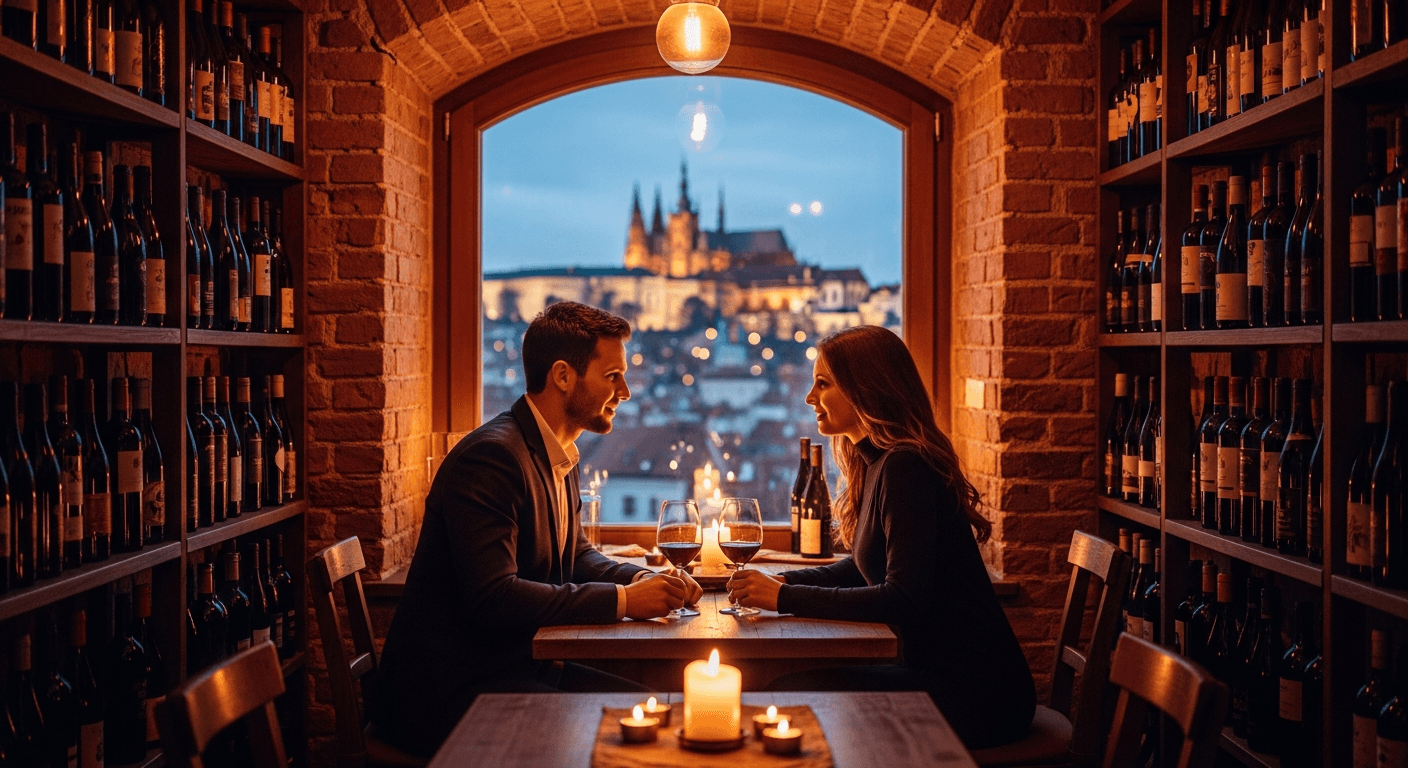
You do not need to be fluent in Czech to date here. The vast majority of younger Czechs in Prague speak excellent English, and many are genuinely pleased to practise. Conducting a relationship in English is entirely normal and sustainable.
But learning even basic Czech does something that English alone cannot: it communicates genuine commitment. The Czech language is notoriously difficult — it has seven grammatical cases, a sound system with several consonant clusters that do not exist in most Western languages, and vocabulary that shares almost nothing with English. When a foreigner makes the effort to learn even fragments of it, Czechs notice. It says something specific: that this person is here for real, not just passing through, not treating Prague as a backdrop to their actual life elsewhere.
This matters romantically for a simple reason: one of the recurring anxieties Czech people have about relationships with expats is impermanence. Prague has seen many waves of foreigners who arrived, formed connections, and then left — for the next opportunity, the next city, the next adventure. Learning Czech signals that you are not that person. It does not guarantee anything, but it removes a significant psychological barrier.
The Neighbourhoods That Matter
Prague is a city of very distinct neighbourhoods, each with its own social character, and where you live and spend time shapes your romantic options considerably.
Vinohrady and Žižkov are the neighbourhoods of choice for educated young professionals — both Czech and international — and have by far the richest social infrastructure for people in their late twenties and thirties. The restaurant and café scene here is excellent, the architecture is beautiful, and the demographic tends toward the curious, cosmopolitan, and culturally engaged. If you are looking for people who are both rooted in Czech culture and comfortable with international connection, these are the neighbourhoods to spend time in.
Malá Strana and the Old Town are visually spectacular but socially less useful, particularly for anyone trying to meet people who actually live in Prague. The tourist concentration in these areas creates a social atmosphere that is transient by nature — the people around you are, in most cases, passing through.
Holešovice and Karlín are the neighbourhoods most associated with the younger, creative-professional Prague of recent years — slightly rougher around the edges, more affordable, and with a social scene that mixes Czech and international more fluidly than most. If you are in your mid-twenties and looking for a more mixed, less polished environment, these are worth exploring.
What Czech Dating Culture Actually Looks Like
Czech romantic culture has some characteristics that are worth knowing before you encounter them and misread them.
Czechs tend not to date in the way that is common in Anglo-American cultures — the explicit "I am on a date with this person" framing, the deliberate romantic staging, the clear signal that this meeting has romantic intent. More commonly, early-stage romantic interest in Czech culture expresses itself as simply spending time together: a walk, a drink with friends, an activity that creates space for connection without the pressure of an explicitly romantic label.
This is not evasiveness. It is a reflection of a culture that is less comfortable with explicit emotional performance than most English-speaking cultures are. The shift from "spending time together" to something clearly romantic tends to happen gradually and is often not marked by any specific moment — it simply becomes obvious to both people over time.
For someone accustomed to more direct signalling of romantic intent, this can feel ambiguous. The most useful recalibration is to pay less attention to whether things are "officially" progressing and more attention to whether you are actually enjoying the person's company and whether they keep choosing to spend time with you. If both of those things are true, it is probably going somewhere.
Building the Infrastructure for Connection
The romantic lives that work in Prague — for both expats and locals — tend to be built on consistent presence in specific communities rather than on specific strategies for meeting people. The person who joins a running club and goes every week, who becomes a regular at a neighbourhood wine bar, who attends the same monthly jazz night, who volunteers for a community project: this person is building the social infrastructure that makes real connection possible over time.
This is the advice that applies everywhere and that almost nobody follows, because it sounds too slow and too undirected. But Prague is a city that rewards it specifically and well. The social fabric here is knit from familiarity and trust, and both of those things require time and repeated contact to develop.
The tourists and the people who treat Prague as a temporary posting will always exist in a thinner version of the city — the surface of it, the postcard version, which is beautiful but not the thing itself. The city that is possible for people who stay, who learn, who show up in the same places long enough to be known: that is a different and considerably richer place.
The Honest Timeline
If you have arrived in Prague recently and are wondering why meeting people feels harder than you expected, the honest answer is: it takes longer here than in most places. Six months is roughly the point at which people who have been genuinely engaging with Czech life — language, local spaces, community — begin to report that their social life is starting to feel real. A year is when it becomes settled.
This is not discouraging if you have accepted it. It is discouraging only if you have been expecting the city to hand you connection on the same timeline that a more extroverted social culture might. Prague requires investment. The return on that investment, for people who make it, tends to be exactly the kind of deep, loyal, genuine connection that is harder to find in cities where social life moves faster.
The city has everything. The spires, the river, the wine bars, the parks, the music — and underneath all of it, a warmth that is entirely real, just one layer deeper than most cities tend to be.
iwillfindyou.love is a free-to-message dating platform with users across Europe, including in Prague. There is no paywall on messaging — you can connect with anyone from day one without a subscription.
Further Reading
-
Derek Sayer. The Coasts of Bohemia: A Czech History. Princeton University Press, 1998. A deeply researched account of Czech cultural identity, with strong relevance to understanding the social and historical roots of Czech reserve and communal loyalty.
-
Milan Kundera. The Unbearable Lightness of Being. Harper & Row, 1984. Fiction, but essential reading for anyone who wants to understand something about the Czech sensibility — the interplay of lightness and weight, intimacy and distance, that shapes Czech romantic culture.
-
Alena Heitlinger. In the Shadow of the Holocaust and Gulag: Women and Emancipation in Post-Communist Central Europe. Transaction Publishers, 1999. Useful context for understanding gender dynamics and relationship expectations in post-communist Czech society.
-
Jonathan Bolton. Worlds of Dissent: Charter 77, the Plastic People of the Universe, and Czech Culture under Communism. Harvard University Press, 2012. An excellent account of how Czech civil society maintained itself under pressure — directly relevant to understanding the depth and durability of Czech social bonds.
-
Roman Krčmář and Eva Klíčová. Czech Society in the 21st Century. Academic publishing, 2019. Sociological overview of contemporary Czech demographics, values, and social norms, including attitudes toward partnership and family.